Quick thesis: why ipe needs a purpose-built spec
Ipe is an excellent choice for stair treads and thresholds where durability and rot resistance matter, but it is not a drop-in replacement for softer domestic species. Its matter-of-fact hardness and density change how you machine, fasten, finish and detail transitions. A good specification saves time and keeps installation details coordinated across the tread supplier, the stair-stringer fabricator and any metal nosing supplier.
Below are the practical items to put into a drawing or procurement request so the shop, installer and finish contractor know exactly what to supply and how to install it—without guessing at thickness, profile or fastening methods.
Thickness and nosing profiles: what to confirm with the supplier
Don’t assume ‘flooring thickness’ equals ‘stair tread thickness.’ Confirm the actual finished thickness of the tread or plank as supplied and whether that is the finished face or nominal dimension. Ask for shop drawings showing tread face thickness, riser reveal, overhang (nosing lip) and the return at the tread ends if applicable.
Specify the nosing profile you want: full bullnose, partial bullnose, square nosing, or a flush top that accepts a metal transition. If you require a routed groove for a hidden fastener clip or to accept a metal nosing lip, call that out with exact dimensions and groove location relative to the tread face. Also decide whether nosings are factory-machined or left to field trimming—factory machining reduces handling and fitting at the jobsite.
If you expect to match interior and exterior runs (for example an interior stair to an exterior landing), request matching face thickness and identical profile dimension to avoid a step differential at transitions.
Pre-drilling and fastening: plan for a very hard wood
Because ipe is dense and prone to splitting if driven without pilot holes, require pre-drilling for all surface screws and specify countersinks or counterbores where heads will be flush or plugged. For blind-fastening systems, confirm the groove depth and location from the product seller and that the clip system is designed for dense tropical hardwoods.
Call out corrosion-resistant fasteners. For exterior and wet-exposed thresholds, require stainless fasteners appropriate for exterior exposure and compatible with tropical hardwoods. For visible screws on interior work you plan to plug, call for matching plugs cut from the same lot. For high-traffic commercial work, request manufacturer-recommended fasteners and installation torque limits—these vendors test assemblies and can provide pullout guidance.
Where movement is expected, add instructions for elongated or slotted pilot holes at through-bolts or screw shanks so treads can shift slightly with humidity without cracking. If you plan to glue to a substrate, coordinate adhesive selection with the supplier because dense exotics need adhesives formulated to bond these species and to tolerate exterior exposure if applicable.
Slip resistance and finish choices for stairs and thresholds
Decide whether you want the wood to be left to weather (exterior) or coated. Leaving ipe unfinished allows it to weather to a natural silver patina; applying a penetrating oil or sealer preserves color and helps reduce surface checking. For interior use you can apply film-forming varnishes or polyurethanes for a more durable, stain-resistant surface—just be aware that some film finishes can become slick when wet.
For pedestrian safety specify a surface texture or integrated anti-slip solution. Options to call out include factory-machined grooves or serrations across the tread nose, abrasive anti-slip inserts, or a non-slip additive in a topcoat where appropriate. If a metal nosing is used, specify an anti-slip insert or textured face on the metal so the transition does not become a slip point.
Include maintenance expectations in the spec: penetrating oils and surface-applied sealers require periodic reapplication on exterior treads to maintain color and water repellency and to keep slip-resistance performance consistent.
Coordinate treads with stringers and nosing suppliers
Give the stair-stringer fabricator the exact finished tread thickness and the location of any grooves or predrilled holes. Stringers, blocking and brackets must be sized to support the denser tread; confirm bearing lengths and backcut details so packing or under-support isn’t needed in the field.
If you’re using metal nosings, provide the nosing manufacturer’s shop drawing to the tread supplier and ask for a sample fit-up before production. Metal nosings and thresholds require exact tolerances at the wood-to-metal interface; verify that the nosing flange clears the tread overhang and that fastener centers line up to avoid field re-drilling in the dense wood.
Require coordinated shop drawings and mock-ups for complex transitions—particularly where ipe meets tile, stone, or different floor heights—so the architect, nosing vendor and installer sign off on reveals, expansion gaps and attachment details.
Ordering, receiving and on-site handling checklist
When you place a PO, request sample pieces and a written confirmation of finish, thickness, profile, and whether pre-drilling or plugs are included. Order spare treads to cover field trimming, waste and future repairs.
On delivery inspect for straightness, cupping, machining accuracy of nosings and the presence of any factory-applied finish. Store pieces flat, out of direct weather and allow them to acclimate as the supplier recommends before final fitting. For exterior projects keep pieces dry until installation to avoid surface stain or movement from wetting and drying cycles.
Finally, require the supplier to document the lot and appearance so replacements later are a visual and dimensional match.
Practical spec summary: the essential items to call out
Create a short, itemized spec that accompanies your drawings: exact finished tread thickness, nosing profile and overhang, groove locations for hidden fasteners, pre-drilling and countersink requirements, fastener material and head treatment (plugs or finish screws), slip-resistance approach, finish system and maintenance expectations, and coordination requirement with stringer and nosing vendors.
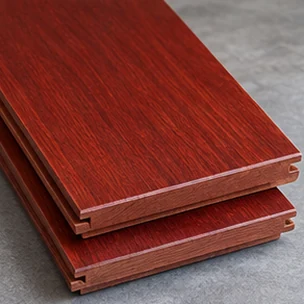
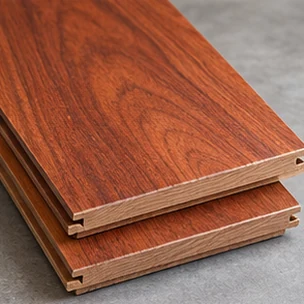
Refer buyers and specifiers to the ipe flooring product page (ipe-flooring) for details on available plank formats and to confirm which product form the supplier will use for stair treads and thresholds.
BEFORE YOU REQUESTYour sourcing checklist.
- Confirm finished face thickness and nosing profile (factory or field machined)
- Require shop drawings showing groove, hole and fastener locations
- Specify pre-drilling, countersinks and plug/cap treatment for visible fasteners
- Specify corrosion-resistant fasteners and confirm compatibility with clips or metal nosings
- Decide slip-resistance approach: machined texture, abrasive inserts, or topcoat additive
- State finish system and maintenance intervals for exterior treads
- Order spare treads from the same lot for repairs and field trimming
- Coordinate and sign off mock-ups with stringer and nosing suppliers
Common questions.
Do I need to pre-drill ipe stair treads?+
Yes—because of its density, ipe should be pre-drilled for surface screws and any through-bolts to avoid splitting and high driving torque. Also specify countersinks where screws must sit flush or be plugged.
Which fasteners work best with ipe?+
Use corrosion-resistant fasteners specified for exterior tropical hardwoods. For visible interior work that will be plugged, coordinate plug material and hole location with the supplier. For hidden systems, confirm the clip and screw system is sized and tested for dense hardwoods.
Should I finish exterior ipe stair treads?+
Finishing is a deliberate choice. Leaving treads to weather reduces maintenance but changes color; penetrating oils preserve color and reduce checking but require reapplication. Film-forming coatings retain color longer but can affect slip characteristics—specify texture or anti-slip measures if using a film finish.
How do I avoid movement problems at transitions?+
Specify expansion gaps, slotted fastener locations where movement is expected, and coordinate exact thicknesses so adjacent materials meet flush without pinching the ipe. Require shop drawings and a mock-up for any complex transition.