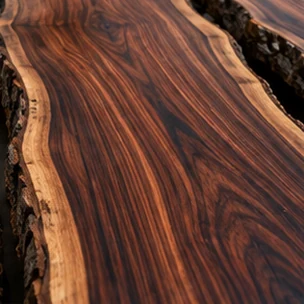
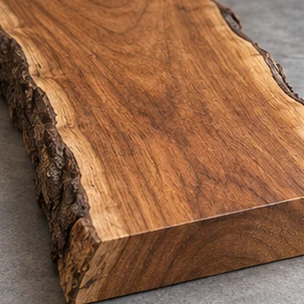
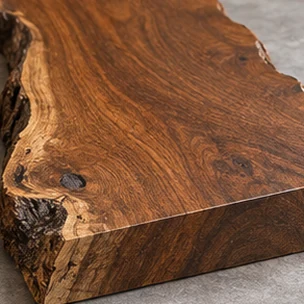
Single-piece continuity
A single slab gives continuous grain and a dramatic live-edge aesthetic that’s difficult to replicate with joined boards.
Wood, with a clear specification
Angelim slabs are large-format tropical hardwood slabs traded under a commercial name that can include multiple species; they’re chosen for heavy furniture tops, island counters, mantels and sometimes decking — always confirm species, slab dressing and lot specifics before specifying.
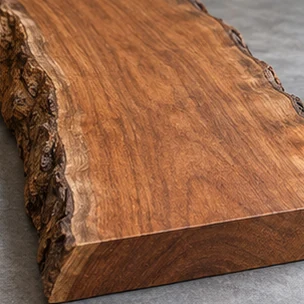
Angelim slabs are sold as large-format hardwood pieces and marketed for furniture tops, countertops, mantels and occasionally decking. The commercial name covers multiple tropical species in different supply chains, so expect variability in appearance and mechanical behavior between lots.
Because slabs are typically heavy and large, buyers should confirm finished thickness, flatness tolerances, and whether the slab will be milled, sanded or finished before shipping. Photos of the actual slab, moisture information and clear packing instructions reduce surprises on delivery.
A single slab gives continuous grain and a dramatic live-edge aesthetic that’s difficult to replicate with joined boards.
Dense tropical hardwoods used as Angelim slabs generally provide substantial mass and good wear for tabletops and heavy-use surfaces.
Slabs can be left live-edge, bookmatched, or carefully flattened and resawn for waterfall edges and heavy countertops.
| Specification item | What to confirm | Why it matters |
|---|---|---|
| Overall dimensions | Actual length, max usable width and thickness | Determines fit, yields, and support requirements |
| Face condition | Cracks, bark inclusions, sapwood, spalting | Affects usable area and repair decisions |
| Mill condition | Rough-sawn, surfaced, sanded—tolerance notes | Impacts prep time and final thickness control |
| Drying & moisture | Moisture content reading or kiln report | Helps predict movement and finishing schedule |
| Species identity & grading | Botanical name if available, grade notes | Informs expected hardness, stability and finish behavior |
| Pack & crate | Crate dimensions, skid type, lifting points | Important for receiving, offloading and damage prevention |
Request photos of the actual slab and confirm whether the supplier will plane, sand or stabilize cracks prior to shipping.
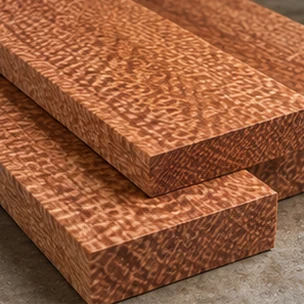
Angelim slabs typically show strong color range between boards and within the same slab: expect heartwood tones from warm golds to deeper reddish-brown and sometimes darker streaks or mineral lines. Grain can be straight to interlocked and the face may show pronounced medullary rays or coarse texture depending on the specific species and how the slab was sawn.
Because slabs are large single pieces, color and grain movement across the panel are a major design feature — order multiple slabs from the same lot when you need consistent color for matching long runs or bookmatched tops.
Angelim slabs sold as large-format pieces are usually dense and can be abrasive. Expect blades and router cutters to dull more quickly than with domestic hardwoods. Use carbide tooling and check cutters frequently when dimensioning edges, flattening faces or cutting joinery.
Interlocked or reversing grain can cause tear-out when planing or routing; take light passes, set up a sled for jointing or flattening the slab, and use backer boards for final edge trimming around live edges. Dense slabs often need pre-boring for long screws and hold fast when gluing, but always do a small test joint to confirm glue choice and clamp pressure for the particular lot.
Because slab thickness and face flatness vary by supplier, confirm whether the slabs are surfaced and to what tolerance — some are supplied rough-sawn, others surfaced S4S or simply face-planed. If you need consistent thickness for table-top construction or joinery, require finished thickness and flatness tolerances in the order.
As with any large hardwood slab, acclimate material to the shop or jobsite to reduce movement after fabrication. Thick slabs change moisture more slowly than boards; allow time and space for the slab to come toward equilibrium and ask the supplier for current moisture content readings when available.
For finish selection, dense tropical hardwoods often accept oils, varnishes and catalyzed finishes well, but surface preparation matters. Test your finish on an offcut to verify color depth, film build and drying. If using Angelim slabs outdoors or in heavy exterior use, discuss the lot’s durability and recommended maintenance with the supplier — some Angelim-labeled woods are used for decking, but long-term exterior performance depends on species, finish and detailing (drainage, end-grain sealing, fastener type).
Designers and builders select Angelim slabs for large, single-piece tops where a strong, warm tropical aesthetic and substantial mass are desired: dining tables, conference tables, island tops, mantels and statement shelving. In some markets slabs are also milled for exterior decking and heavy-use surfaces because the wood’s density gives it good wear resistance.
A single thick slab simplifies construction for live-edge furniture and floating tops but plan for heavy supports and hardware rated for the slab weight. For continuous countertops or long runs, check for matching grain and color across multiple slabs and plan seams and end-matching in advance.
When evaluating slabs from different suppliers, compare: actual overall dimensions and usable face width (not just the maximum width at one point), finished or rough thickness, face condition (flat, cupped, cracks, bark inclusions), whether the slab is split or bookmatched, and whether the supplier will perform any milling, flattening or stabilization before shipping.
Ask for clear photos of each slab, a statement of how the slab was cut (live-edge, slab from trunk vs. engineered top), and any drying or moisture data the supplier can provide. Confirm the species identity and grading, payment and freight terms before committing — the supplier will confirm the actual lot, quote and delivery conditions at time of order.
Single-piece Angelim slabs make striking dining or conference tables. For stability, plan internal battens, a stout table base and allowances for seasonal movement; order matching slabs from one lot when color uniformity is required.
Thick slabs can be used for island tops and heavy countertops. Confirm finished thickness and edge treatment options, and test your finish and sealing approach on a sample to guard against staining and water ingress.
Live-edge Angelim slabs create dramatic mantels and feature walls. Check for cracks and voids and plan for epoxy fills, concealed fasteners, and proper anchorage to handle the slab weight.
Some lots marketed as Angelim are used for exterior decking where high density is desired. Verify species durability, recommended finish, and detailing for drainage and fasteners before specifying for exterior exposure.
Define each slab in the order with photos, finished thickness, face condition, and whether you require milling or stabilization. Confirm species identity and lot acceptance criteria before the supplier cuts packing and dispatch.
Slabs are heavy and often exceed typical pallet sizes. Provide receiving-side lift equipment and a clear delivery site plan. Confirm crate dimensions and lifting points to avoid handling damage at delivery.
Store slabs flat on adequately supported battens with stickers to prevent cupping and allow airflow. Keep slabs in a covered, dry location away from direct ground contact until acclimated and ready for fabrication.
Bolivian Rosewood slabs offer dramatic, streaked faces and dense structure suitable for live-edge tables and high-end tops; confirm species, slab photos, and moisture condition with the supplier before ordering.
Explore productCumaru slabs are dense tropical hardwood slabs used for heavy tabletops, live-edge furniture, and decking. Buyers should confirm species identity, slab surface and drying history, and plan for heavier tooling and careful acclimation.
Explore productDeodar cedar slabs are aromatic, lightweight softwood slabs commonly used for mantels, tables and interior millwork. Expect lot-to-lot variability and confirm species, drying history and slab condition with the supplier before ordering.
Explore productIpe slabs are very dense tropical hardwood slabs (also called Brazilian walnut or Lapacho) often used for heavy‑use tables, countertops and exterior furniture. Confirm species, slab condition and drying method with the supplier before finalizing a specification.
Explore productFocused guides to the specification, application, and delivery questions behind this product.
Angelim slabs can be used for exterior and heavy‑use surfaces when you confirm species identity, specify drying and acceptance criteria, detail for drainage and movement, use appropriate stainless fasteners, and commit to a finish and maintenance plan tied to observed wear.
Read this InsightThis guide explains practical, shop-ready strategies to install a heavy Angelim live-edge mantel or floating shelf safely and cleanly. It covers structural supports (steel cleats, backer plates, and brackets), concealed fasteners (routed cleats, threaded rods and inserts), reinforcing and filling voids, finish choices for interior mantels—especially near heat—and a jobsite checklist to prepare the wall and slab for successful installation.
Read this InsightSelecting the right sealing and finishing approach for an Angelim slab island balances durability, repairability and food-safety. Test finishes on the same slab, seal end grain and cutouts in the shop, choose a finish system that fits expected use (oil + topcoat or conversion varnish for heavy use; epoxy for impermeability but harder repairs), plan mechanical support and attachment that allow movement, and document a maintenance plan for the owner.
Read this InsightDesigning a dining table with an Angelim slab means planning for heavy weight, supporting the slab where bending loads occur, and attaching it with fasteners that allow seasonal movement. Use continuous or closely spaced bearings for long spans, prefer slotted or floating hardware, decide on a steel or wood base that matches your stiffness and aesthetic needs, prepare edges and the underside before assembly, and finish both faces to balance moisture exchange. When in doubt, verify slab weight, M
Read this InsightPractical packing and shipping specifications to include in purchase orders for Angelim slabs: crate and skid structure, blocking and restraint, moisture and phytosanitary controls, receiving checks, and a step-by-step claims workflow.
Read this InsightAngelim slabs can be specified for both interior tops and exterior decking, but the decision hinges on confirming the trade-name mapping to a botanical identity and lot, designing details that accommodate movement and moisture (especially for exterior work), selecting appropriate finishes, and requiring full-size samples or mock-ups from the actual lot before committing to a large order.
Read this InsightProvide explicit, measurable flatness and finished-thickness tolerances in your Angelim slab purchase order. Choose tolerance tiers to match the intended use, state measurement methods and inspection windows, and decide whether the supplier mills to final thickness—each choice affects lead time, cost and risk.
Read this InsightYes — Angelim slabs are commonly used for large indoor tabletops because their mass and warm tones make striking tops and benches. Confirm slab flatness, thickness and any internal cracks before purchase, and allow time in the shop to flatten and stabilize the slab prior to final joinery and finishing.
Some Angelim-labeled woods are used outdoors, but durability varies by species and lot. If you plan exterior use, ask the supplier about the specific species, recommended finish system, and fastener details. Design details — drainage, sealed end-grain, and appropriate attachment hardware — are crucial to longevity.
Specify whether you need the slab surfaced, flattened and sanded to a finished thickness or supplied rough. Ask for photos, moisture content readings if available, and packing/crating details. The supplier will confirm the actual lot, quote, payment terms and freight responsibilities when you place the order.
Send your volume, destination, and key specifications. A broker can follow up with availability and commercial terms.