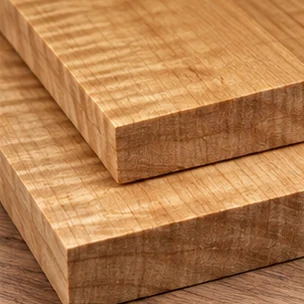
Attractive, warm color
Heartwood ranges from pinkish-brown to richer red-brown that oxidizes attractively over time, making the wood a popular choice for furniture and millwork.
Wood, with a clear specification
African Mahogany lumber is a trade-name grouping of West and Central African hardwoods prized for warm reddish-brown color and good finishability; confirm species, drying, and lot consistency when specifying for furniture, millwork, or wide tops.
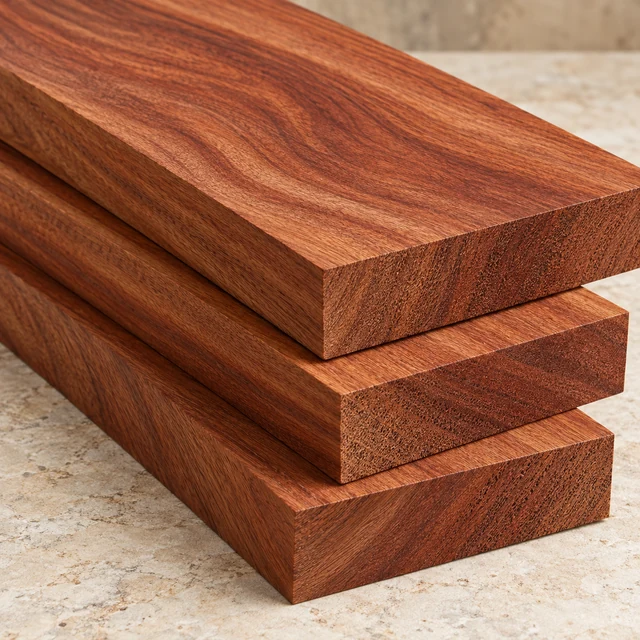
African Mahogany is a commercial grouping of several West and Central African hardwoods frequently used by furniture makers and millworkers for its color and finish qualities. The lumber is commonly selected for visible interior work where a warm, reddish hue is desired.
Because the trade name includes multiple species, suppliers may offer mixed or single-species lots. For consistent finish color, stable panels, or exterior use, buyers should confirm the species, drying method, and lot photos or samples before placing an order.
Heartwood ranges from pinkish-brown to richer red-brown that oxidizes attractively over time, making the wood a popular choice for furniture and millwork.
Generally machines and sands well; readily accepts common adhesives and finishes—suitable for hand and machine work.
Works for both traditional and contemporary designs; grain can be straight or show light ribbon figure for visual interest.
| Spec item | What to confirm | Why it matters |
|---|---|---|
| Species / commercial name | Exact species or provenance | Different species vary in stability and durability |
| Grade / appearance | Photos or sample from the lot | Controls color consistency and defect allowance |
| Moisture & drying | Kiln-dry status and measured %MC | Affects movement, gluing, and finishing |
| Sizes & usable lengths | Minimum usable widths and clear face lengths | Determines yield for wide panels and tabletops |
| Surface condition | Planed, rough, or S4S (confirm) | Affects machining time and surfacing needs |
| Quantity basis | Board feet, linear feet, or pieces | Ensures apples-to-apples price comparison |
Always request lot photos, moisture documentation, and a written confirmation of species and grade before purchase.
African Mahogany machines with generally clean cuts on hand and power tools. Interlocked grain on some lots can cause tearout with cross-grain planing; taking shallow passes, using a sharp cutter, and orienting tooling to the grain helps. It sands to a smooth surface and accepts most stains and clear finishes predictably.
Fastening and gluing: it glues well with standard woodworking adhesives and holds screws and nails adequately for furniture and millwork. For highly loaded mechanical connections, confirm the supplier's lot and consider pre-drilling or using bolts. Always test your chosen glue and finish on a scrap cut from the actual lot you will use.
African Mahogany will move seasonally like most tropical hardwoods. Drying history matters: kiln-dried stock from a reputable mill that documents final moisture content is easier to integrate into cabinetry and interior furniture. If the supplier does not provide moisture documentation, measure moisture content on arrival and acclimate assemblies in the installation environment before final finishing.
For applications where tight dimensional stability is required (long tabletops, wide panels, exterior uses), discuss acceptable tolerance ranges with your supplier and consider design details that allow for seasonal movement (breadboard ends, floating panels, expansion gaps).
Common uses for African Mahogany lumber include furniture, cabinet frames and doors, architectural millwork, interior trim, and decorative veneers. It is frequently chosen for its warm color and good finishability rather than for structural load-bearing uses.
Before specifying the wood, confirm: the exact species or commercial grade offered, kiln-dry status and reported moisture content, the distribution of heartwood vs sapwood in the lot, and the available widths and lengths. For exterior uses or decking, verify species suitability and required preservative or sealing approaches with the supplier and your engineer.
When evaluating quotes, compare the same basic attributes: species or provenance, grade or appearance specification, finished or rough surface, board lengths and usable clear face, and how quantity is stated (board feet, linear feet, pieces). Don’t assume identical names mean identical material.
Request clear photos or sample boards from the actual lot when color and grain consistency are important. Ask the supplier to confirm whether the lumber is mixed-species under the "African Mahogany" label, and get written confirmation of moisture content and any kiln-dry documentation if you need predictable movement.
African Mahogany takes stain and clear finishes well. For even tone, use a stain test on the lot; consider a pigmented stain or conditioner if sapwood contrast is high. Where UV darkening is a concern, specify a finish with UV protection or plan for maintenance.
For long-lived pieces, avoid relying on a single small sample: color and grain on a finished cabinet door should match adjacent boards from the same lot. The supplier will confirm the actual lot and quote; confirm payment and freight terms before committing to a large purchase.
Used for legs, rails, and visible frame parts where warm color and good finishing are priorities. Select straight-grained, stable boards and confirm usable lengths for matched pairs.
Excellent for painted or clear-finished cabinetry. When a consistent appearance is required across multiple doors, specify lot-matched boards or request veneer matching from the supplier.
Can be used for wide tops if you can source long clear faces. For large tops, request photos of the actual pieces and discuss edge-joining technique to accommodate movement.
Works well for trim and paneling where a warm, durable appearance is desired. Confirm surface finish and machining level supplied to reduce shop work.
Define species, grade, minimum usable widths/lengths, and quantity units (board feet or pieces) in writing. Ask the supplier to confirm the lot and provide photos, moisture documentation, and payment/freight terms before accepting a quote.
Plan receiving space for bundles and inspect on arrival for obvious shipping damage, correct quantities, and matching lot identifiers. Measure moisture content on arrival if kiln-dry certification was required.
Store flat on stickers in a dry, ventilated area away from direct sunlight. Keep bundles banded until you can inspect and sort boards by color and figure; acclimate boards to shop conditions before final machining and finishing.
Anigre lumber is an African hardwood trade name prized for warm, even faces used in furniture, veneer, and interior millwork. Appearance and working traits vary by species and lot—confirm identity, photos, and drying details before you specify.
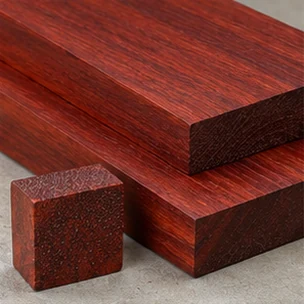
Explore productBloodwood lumber is a trade-name group of deep-red tropical hardwoods used for decorative interior work, turning, and selective high-wear surfaces. Confirm species, grade, and lot details before specifying or machining.
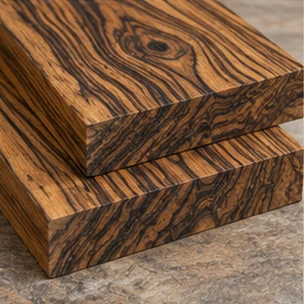
Explore productBocote lumber is an exotic, high-figure hardwood prized for dramatic veneers, accents, and small-work pieces—confirm species, lot, and surface condition before specifying.
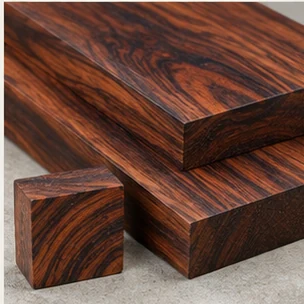
Explore productDense, streaked tropical hardwood sold under trade names like Morado, Pau Ferro or Santos Rosewood; confirm species, lot appearance and moisture before specifying for furniture, millwork, or specialty goods.
Explore productFocused guides to the specification, application, and delivery questions behind this product.
This buyer’s guide translates the common appearance and handling pitfalls of African mahogany into a short, enforceable spec for interior trim and paneling. Key controls are a defined appearance grade, pre-shipment lot photos, a finish-approved mockup, delivery moisture certification, and a clear finishing sequence. Adding these items to your purchase orders and shop drawings reduces surprises and ensures consistent results across rooms and jobs.
Read this InsightTo secure wide, clear faces in African Mahogany for tabletops, require lot-specific photos and measurements, explicit confirmation of clear-face dimensions, moisture documentation and an on-lot finish test. Design joins, fastenings and breadboard details to allow seasonal movement, acclimate and mill only after acceptance, and treat the order as a one-off procurement to avoid surprises on delivery.
Read this InsightPractical specification guidance for using African Mahogany on cabinet doors and face frames: require and approve lot-matched samples, decide on S4S vs rough stock, set explicit edge- and face-banding requirements, test the full finish system on the actual lot, and include acceptance criteria for receiving.
Read this InsightTo select African Mahogany for chair and casework frames, prioritize lot-matched, straight-grained boards with stable drying history; test glue, fasteners and finish on a coupon; design joinery to accommodate movement; and plan cuts so rails and stiles are matched for grain and color.
Read this InsightAfrican mahogany can be used outdoors in sheltered, detailed, and well‑finished applications but is not a universal exterior hardwood. Confirm species identity and lot durability, pre‑finish and seal end grain, design to shed water and allow movement, and require maintenance in the specification.
Read this InsightA step-by-step receiving checklist for exotic hardwoods: request lot ID and pre-shipment photos, require a packing list with board counts, inspect packaging and bundles on arrival, take multiple moisture readings and document any damage before storage and acclimation.
Read this InsightPractical templates and inspection steps to control species, sapwood, color and ribbon figure when ordering African Mahogany lumber. Use a signed sample or strict photo standard, require botanical ID and lot photos, set sapwood rules and moisture measurement, and make acceptance conditional on matching the approved lot.
Read this InsightIt can be, but stability depends on species, drying, and board selection. Choose boards with consistent drying documentation, allow for movement in the design (breadboard ends, floating panels), and request longer usable lengths from the supplier so you can select straight, stable pieces.
Standard woodworking adhesives bond well to African Mahogany and common screws hold adequately, but pre-drilling is recommended for fine joinery or near edges to avoid splitting—especially on narrower or highly figured boards. Test fasteners and adhesives on scrap from the same lot.
Not all species sold as "African Mahogany" are equally durable outdoors. Before specifying for exterior use, confirm the species, ask about natural durability ratings from the supplier, and plan for appropriate sealers or finishes. For decking or exposed exterior elements, verify suitability with a structural or exterior-grade supplier.
Send your volume, destination, and key specifications. A broker can follow up with availability and commercial terms.