Even, neutral appearance
Anigre offers warm, consistent tones that work well under clear finishes or light stains, making it a versatile choice for contemporary and traditional projects.
Wood, with a clear specification
Anigre lumber is an African hardwood trade name prized for warm, even faces used in furniture, veneer, and interior millwork. Appearance and working traits vary by species and lot—confirm identity, photos, and drying details before you specify.
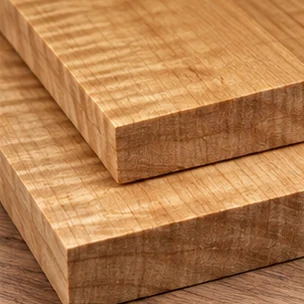
Anigre is a commercially used trade name for several related West and Central African hardwoods. In practice the name describes timber chosen for its long, clear faces and warm brown hues—attributes that make it popular for furniture faces, cabinet doors and decorative veneers.
Because the trade name covers multiple trees and the appearance can vary between logs, buyers should not rely on the single word “Anigre” as a full specification. Request photographed samples or face‑up boards, drying and moisture data, and the supplier’s lot identification to lock down expectations before committing to production.
Anigre offers warm, consistent tones that work well under clear finishes or light stains, making it a versatile choice for contemporary and traditional projects.
Long, clear grain sections make the species group economical for slicing and producing decorative faces for plywood and panels.
Generally machines and sands cleanly; straight-grain boards are easy to plane and finish with conventional tooling.
| Appearance | Stability | Workability | Common commercial cuts |
|---|---|---|---|
| Warm yellow‑brown to golden heartwood | Moderate — depends on species and drying | Cuts clean; interlocked grain may tear out | Boards for faces; flitches for veneer |
| Sapwood paler and may be wide | Movement similar to many tropical hardwoods | Holds fasteners; pre‑bore as needed | Panel stock and millwork lengths |
| Figure ranges from plain to occasional fiddleback | Acclimation recommended before final joinery | Gluing bonds well with common adhesives | Request photos for appearance grading |
Qualities vary by species and lot. Confirm species, drying method, and photographed samples with the supplier.
Anigre is generally considered workable with hand and machine tools. Straight grain boards cut and plane cleanly; interlocked grain can cause tear‑out on planers and jointers. Take cuts light when planing across variable figure and use a sharp cutter geometry to reduce blowout.
Drilling and routing are straightforward, but pilot holes are prudent for close edge distances or thin sections. Anigre holds screws and dowels well when the pieces are glued up properly; as with most hardwoods, pre‑bore for large screws or brittle trim locations. Gluing responds well to common wood adhesives — confirm bond on sample pieces if a specific adhesive system or veneer glue is required.
Like most tropical hardwoods, Anigre can be dimensionally stable but will still move with changes in moisture content. Have the supplier confirm the drying method and target moisture content at shipment; for interior millwork, aim for boards acclimated to the jobsite conditions before final machining.
Finish behavior is generally straightforward: Anigre accepts dye and clear finishes evenly on plain‑sawn surfaces, though highly figured areas may raise a little more when sealed. Use sanding sealer or thin coats to even out absorption and test tinting on sample pieces. If you’re working with veneer, try the finish sequence on a glued flitch to check how glue and finish interact.
Anigre is widely used for furniture faces, cabinet doors, interior millwork, and as a veneer face for plywood and architectural panels. Its warm, even tones and the availability of long clear cuts make it a favorite when a neutral but refined appearance is desired.
Veneer production is an important end use—manufacturers and cabinet shops specify Anigre for plywood faces and decorative panels because it cuts a broad, consistent appearance when sliced. For solid applications choose matched lots and be prepared to sort for color and grain direction when bookmatching or producing continuous panels.
When comparing quotes, ask for these specifics: confirmed species or trade group, lot photographs, average and usable board lengths, face widths, grade or appearance standard, drying method and moisture content at shipment, and whether pieces were edged or surfaced. Don’t accept “Anigre” alone as a full specification—insist on lot or species confirmation and any grading rules the supplier used.
Also define the commercial unit (board feet, pieces by length, or per bundle), intended finish, and whether you will accept mixed lots. For veneer work ask whether the lumber came from logs cut for veneer production (flitch or rotary) and whether the supplier can supply matched flitches for bookmatching.
Use for door faces, drawer fronts and tabletops where a warm, even look is desired. For visible surfaces specify single‑lot matches and request face‑up samples for color control.
Anigre produces attractive sliced veneer and is frequently specified for decorative plywood faces. Request flitch information and whether the supplier can provide matched veneer sequences.
Long clear boards make it suitable for paneling and built‑in millwork; confirm acclimation and consider panel construction methods to manage movement.
Good choice for door faces and drawer fronts because of consistent color and the ability to finish smoothly; sort boards for grain direction when planning door layouts.
Define species/lot, appearance grade, usable lengths and unit (board feet or pieces). Ask for photos and confirm drying target and moisture content at shipment so the seller’s lot matches your specification.
Have receiving inspect photographed boards against the shipped lot and check for obvious damage. Note bundle identification and lot numbers on the delivery receipt and report discrepancies immediately.
Store flat, supported across the width and off the ground in a dry, ventilated area. Keep bundles wrapped or covered to avoid rapid moisture swings; acclimate to shop conditions before machining.
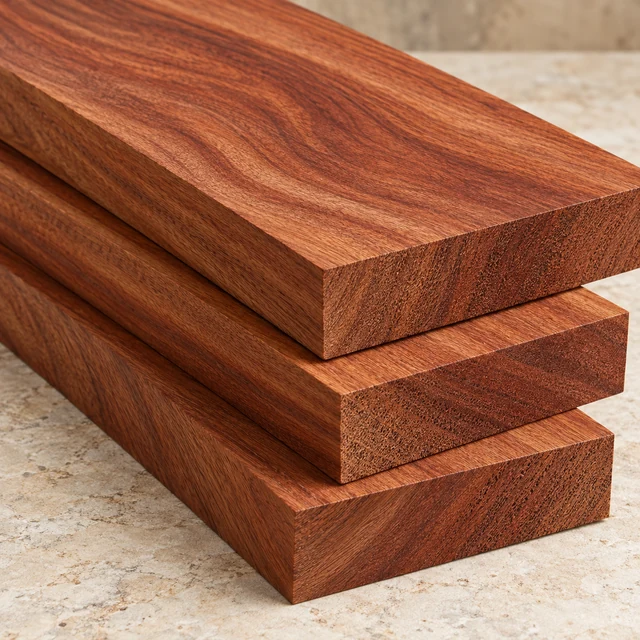
African Mahogany lumber is a trade-name grouping of West and Central African hardwoods prized for warm reddish-brown color and good finishability; confirm species, drying, and lot consistency when specifying for furniture, millwork, or wide tops.
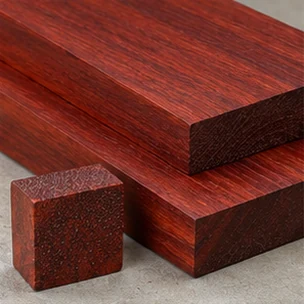
Explore productBloodwood lumber is a trade-name group of deep-red tropical hardwoods used for decorative interior work, turning, and selective high-wear surfaces. Confirm species, grade, and lot details before specifying or machining.
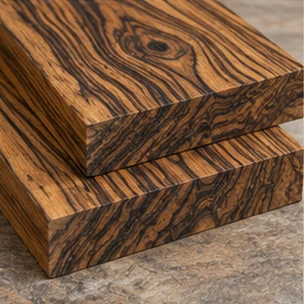
Explore productBocote lumber is an exotic, high-figure hardwood prized for dramatic veneers, accents, and small-work pieces—confirm species, lot, and surface condition before specifying.
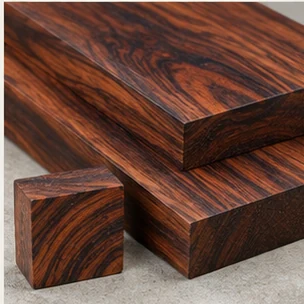
Explore productDense, streaked tropical hardwood sold under trade names like Morado, Pau Ferro or Santos Rosewood; confirm species, lot appearance and moisture before specifying for furniture, millwork, or specialty goods.
Explore productFocused guides to the specification, application, and delivery questions behind this product.
A practical specification checklist for cabinet shops ordering Anigre for doors and drawer fronts: choose faces and grain direction, lock down machining and hardware preps, and require finished samples from the same lot before you accept delivery.
Read this InsightAnigre is a good choice where a pale, warm hardwood face is desired; use veneer or engineered panels for long elevations and large doors, reserve solid Anigre for narrow panels and trim, and plan matched faces, balanced construction, and pre‑finish approvals to avoid appearance and movement issues.
Read this InsightTo secure consistent Anigre veneer yield for plywood faces, specify the cut method and match style, require flitch-level documentation and photos, run lamination and finish trials, and order surplus sheets from the same flitch. Put these requirements in the PO and approve a glued sample before full production.
Read this InsightThis guide tells furniture shops what to check when ordering Anigre for cabinets, doors and exposed casework: confirm species and lot, request usable lengths and matched sets, plan grain flow on large parts, run finish tests on actual boards, and specify surfacing and moisture targets. Use the included checklist when requesting a quote so visible pieces read consistently and arrive ready for efficient machining and finishing.
Read this InsightAnigre is suitable for cabinets, veneer faces, and furniture when you match lot characteristics to the application: choose veneer-grade flitches and matched panels for wide doors and runs, select consistent flatsawn or quartersawn boards for visible furniture faces, and prefer veneered panels for stability on large surfaces. Specify matching, edge treatment, and finish tests before production.
Read this InsightA practical, dock‑side SOP for receiving Anigre lumber: protect and photograph shipments, verify lot identity and paperwork, sample and log moisture readings, stack with uniform stickers and breathable protection, quarantine and document nonconformances, and use the Anigre Lumber product page checklist to codify acceptance criteria.
Read this InsightA practical checklist and sample order language so your Anigre lumber or veneer order arrives with the species, look, and drying condition you need for furniture and matched panels. Require a Lot ID, botanical name, board‑by‑board photos, drying target with measured MC on the packing list, finished dimensions and usable lengths, and clear grade/appearance allowances.
Read this InsightAnigre is commonly used in cabinets and large panels, but stability depends on species and initial drying. Require the supplier’s drying target and acclimate boards on site before final machining. For wide panels consider panel construction techniques—breadboarding, floating panels, or veneering over stable substrates—if movement could be a problem.
Yes. Anigre is frequently sliced and used as a decorative veneer. If you need matched bookmatched panels, request flitches or face‑up matched pieces from the same lot; sequences cut from different logs will vary in color and figure.
Test your full finish build‑up on sample material. Use a sealer or pre‑conditioner to reduce blotching on more porous boards or figured portions. Allow glue lines to cure fully before sanding and finishing, and always verify color and sheen on a finished sample that represents the actual lot.
Send your volume, destination, and key specifications. A broker can follow up with availability and commercial terms.