Why choose Gaboon ebony — and what to watch for
Gaboon ebony is a top choice when you want a visually bold, extremely dense handle material that polishes to a mirror-like black and takes fine detail for pins and chamfers. That very density is also the reason you have to specify it differently from common hardwoods: blank size, grain direction, stabilization, and the way you attach hardware all change to suit gaboon's stiffness and tendency to split or check.
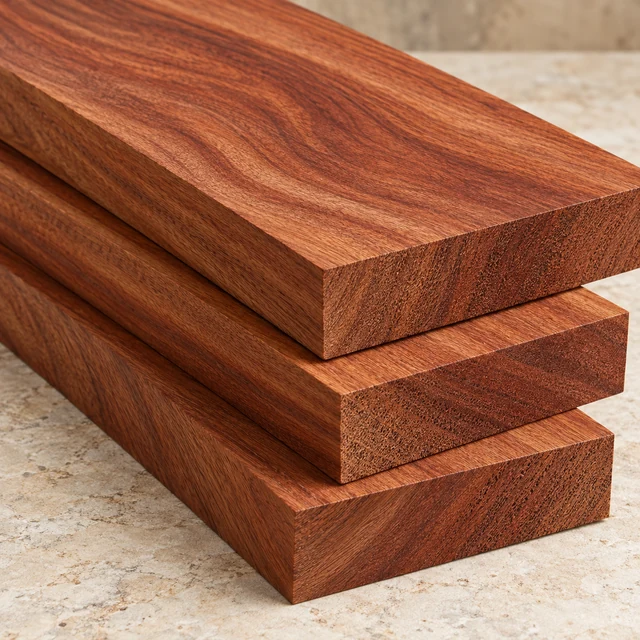
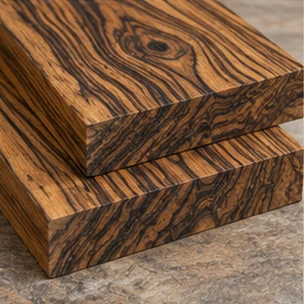
Before you order, lock down the identity and the lot. ‘Ebony’ can refer to several Diospyros species; for knife handles specify Gaboon ebony by name and confirm the supplier’s lot appearance, grade, and whether boards are sapwood-free or contain streaks. Ask for photos of the exact boards or blanks you will receive if visual match is critical.
Selecting blanks: grain, orientation and defects
Pick blanks with the grain and figure you want for the finished handle. Straight, tight grain gives predictable machining and minimal tear-out for pins and screws; cross grain or wild figuring can look spectacular but increases the risk of chipping when you bore or counterbore.
Order slightly oversized blanks so you can mill to a clean reference face and edge. Inspect for internal checks, end-splitting, or mineral streaks that can cause breakage when pins are driven. If you need bookmatched handles, specify matched pairs cut from the same board and confirm orientation with the supplier.
Laminating with liners and practical laminate schemes
Liners are both structural and decorative. A thin liner between the ebony and the tang or pins protects the brittle ebony edge from direct clamping or screw shear, prevents staining at glue lines, and gives a visual reveal. Common liner approaches for knife handles: thin hardwood liners (stable domestic hardwood), G10 or Micarta for mechanical resilience, or metal liners for decorative contrast and abrasion resistance.
When you laminate, prepare perfectly flat mating surfaces. Use a two-part epoxy for the ebony-to-liner bond—epoxy cures reliably against dense, oily woods where standard white PVA can struggle to penetrate. Clamp pressure should be distributed over the whole blank; avoid concentrated clamping at one end. If you plan decorative channeling for pins, make those cuts after lamination so you have a continuous substrate supporting the pin ends.
Pre-stabilization and conditioning: when and how
Gaboon’s density and low permeability make it a candidate for stabilization (resin impregnation) especially for thin sections, fine detail work, or when you need predictable glue and finish behavior. Stabilization improves glue adhesion, reduces tear-out, and makes thin scales or laminates less prone to edge chipping during use.
Stabilization methods vary; common shop practice is vacuum/pressure resin infusion or soaking with low-viscosity monomers then curing. If you plan to stabilize, specify that with your order so supplier can prepare appropriate blanks. If you keep natural (unstabilized) blanks, agree acceptance criteria for surface checks and ask the supplier to confirm general dryness and that blanks have been surfacemd to show true color and figure.
Drilling, fastening and machining: shop techniques that work
Treat ebony like a tool-eating, brittle metal. Use carbide or high-speed-steel tooling kept razor sharp; feed rates that remove small chips are less likely to burn the wood or blunt cutters. Take light depth-of-cut passes on planers and shapers and avoid taking large hogging cuts in one pass.
For holes and pins: always back up the blank with sacrificial support to prevent breakout, and use brad-point or Forstner bits for clean entry and exit. Pre-drill pilot holes for pins and screws; countersink carefully and support the surrounding material. For screws, consider through-bolts with washers or use liners where screws terminate—this places the clamping load into the liner, not the ebony. For glued tangs, roughen the steel and use a reliable two-part epoxy; dense ebony will not absorb adhesive the way open-grained woods do, so choose an adhesive formulated for dense and oily materials or use a thin epoxy that wets the surface.
Finishing, edge wear and real-world testing
Finishes change gaboon’s look. Oil finishes and shellac-type seals deepen the color and give a hand-friendly surface; thin cyanoacrylate (CA) seals or epoxy topcoats add abrasion resistance where the handle will be rubbed by a belt or pocket. Many makers apply a thin CA or epoxy barrier, then finish with oil and buff to soften the feel while keeping protection.
Prototype and test. Build a mockup handle with the same blank, liners, pins, and finish you plan to ship. Subject it to the tasks it will see: repeated clamping or levering against work, bending/pull tests of pins, and cycles of damp/dry exposure if the knife will see moisture. Watch for micro-cracking where the ebony is thin, for pin loosening, and for finish wearing at sharp edges. Those early failures tell you whether you need thicker liners, stabilization, or a different pin scheme.
Specifying and ordering: an itemized checklist
When you place an order for gaboon ebony intended for knife handles or small hardware, include: exact product name (gaboon ebony), photos or a photo approval step for grain and color, blank dimensions and finished thickness allowance, whether you require stabilization, liner type and thickness (if you want the supplier to laminate), acceptance criteria for checks and sapwood, and whether the run requires matched pairs.
Also state any machining or match requirements—pre-ripped billets for tang slots, pre-drilled pin holes, or surfacemd faces ready for final machining—so the supplier can quote and prepare the lot to your shop workflow. Finally, confirm logistics questions: how pieces will be packed to prevent edge damage and whether the supplier will pre-stabilize or leave that to your shop.
BEFORE YOU REQUESTYour sourcing checklist.
- Specify 'Gaboon ebony' and confirm supplier lot photos and grade
- List finished blank dimensions and leave machining allowance
- State stabilization requirement (yes/no) and method if required
- Specify liner material, thickness, and whether supplier should laminate
- Request acceptance criteria for checks, sapwood, and mineral streaks
- Confirm surfacemd/planed faces or raw sawn delivery per shop workflow
- Ask how pieces will be packed to protect thin edges and corners
Common questions.
Do I have to stabilize gaboon ebony for knife handles?+
Not always, but stabilization is recommended when you will use thin sections, delicate shaping, or heavy-duty use. Stabilized blanks machine more predictably, accept glue and finish better, and are less likely to splinter around pins and screws. If you keep natural blanks, require tighter acceptance criteria and plan to prototype a finished handle before production.
What adhesive should I use to glue liners or tangs to gaboon ebony?+
Two-part epoxies are the most reliable for bonding to dense ebony because they wet the surface and cure to a tough joint. Standard PVAs may struggle to penetrate and can produce brittle glue lines on dense, oily woods. For thin laminates or decorative work, thin epoxy variants or specially formulated adhesives for dense exotics give the best results.
Will gaboon ebony blunt my tools faster?+
Yes. The density and silica-mineral content of ebony will dull cutters and sandpaper faster than domestic hardwoods. Use sharp carbide tooling when possible and expect more frequent resharpening and abrasive changes.
Can I use screws directly into ebony?+
You can, but always pre-drill pilot holes, back up the workpiece, and ideally locate screws into a liner or use through-bolts where possible. Direct screw thread into thin ebony edges risks splitting or localized crushing.