Thesis: When hard maple is the right choice
Hard maple (the trade name most often used for sugar maple and similar Acer species) is a light‑colored, fine‑textured domestic hardwood prized for strength, smoothness, and an overall clean look. Choose hard maple when you need a dense, uniform face that machines to a crisp edge, accepts tight tolerances, and shows subtle figure rather than bold color variation. The decision between furniture, flooring, and countertops comes down to visual goals, expected wear, and how much movement and finishing effort you’ll accept.
Visual and structural strengths that matter in practice
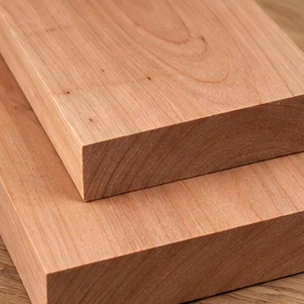
Appearance: Hard maple is usually pale and even across boards, which helps create quiet, contemporary interiors or light furniture that reads as consistent in mass. Figured maple (curly, tiger) is a distinct appearance class—beautiful but more constrained in supply and usually specified separately.
Structure and machining: The wood is dense with a fine, closed grain. That makes it dimensionally stable for many interior uses, yields clean edges and sharp joinery, and turns and carves well. Because the grain is tight, maple can show machining marks and tearout on highly figured pieces; sharp carbide and lighter cuts avoid these problems.
Finishing behavior: Maple can be hard to stain uniformly—the tight grain and low porosity invite blotchiness with conventional stains. Use dye stains, a pre‑stain conditioner, or accept a clear finish that highlights the natural tone. Maple takes finishes smoothly and can be simplified with water‑based clear coats where an even, light surface is desired.
Use‑case comparisons: furniture vs flooring vs countertops
Furniture: Why pick maple — For casework, table frames, turned legs, and small parts, maple’s strength and ability to plane, sand, and hold crisp profiles are major advantages. Choose rift or quarter‑sawn cuts where you need straighter grain and better dimensional stability for long tabletops or drawer fronts. If you want a warm tone, plan on a dye or controlled toner system rather than heavy pigmented stains.
Flooring: Why pick maple — Maple’s wear resistance and pale appearance make it a common choice for busy interiors where a light, uniform floor is desired. For floors you’ll want boards with minimal knots and consistent grain direction for predictable wear patterns. On sites with higher moisture risk, specify engineered construction or ensure subfloor and site conditions are controlled and acclimated prior to installation.
Countertops: Why pick maple — For laminated or edge‑glued tops and butcher blocks, maple’s tight grain and strength are excellent. End‑grain blocks (used for heavy‑use butcher blocks) and edge‑glued tops present different tradeoffs: edge‑glued tops show seams more easily and need careful glue selection and grain matching; end‑grain surfaces handle knives better but require more maintenance and a finish rated for food contact where appropriate.
Grade and finish recommendations by application
Grades to specify — For visible furniture faces and high‑quality casework, lock down FAS/Select or equivalent furniture grades that offer wide, clear faces and consistent color. For flooring choose a grade with minimal knots and consistent widths to reduce layout complexity. For countertops you can accept slightly more character in underside stock, but specify face material with tight grain and confirm plain‑ or quarter‑sawn orientation depending on appearance and stability needs.
Finishes to use — Furniture: thin topcoats or conversion varnishes give durable, clear surfaces; dyes or toners give even color when staining is required. Flooring: use a durable floor finish appropriate to traffic levels and follow manufacturer curing and recoat instructions. Countertops: use a finish rated for food contact where required and seal end grain and glue joints diligently; plan for periodic refinishing on heavy‑use surfaces.
Fabrication, movement, and installation tips you can use tomorrow
Millwork and machining: Use sharp carbide cutters and small depth‑of‑cut passes on figured pieces to avoid blowout. When routing edges, use a backer board or zero‑clearance fence to prevent tearout. Dry sanding progression and careful humidified acclimation before glue‑ups reduce stress in large panels.
Glue‑ups and tops: Match moisture content across boards before edge glue‑ups. Lay out boards for color and grain continuity and use cauls and adequate clamping to keep panels flat. For countertop edges, reinforce long seams and consider splines or biscuits where edge alignment is critical.
Movement and installation: Allow for seasonal expansion—include movement gaps at perimeter installations and floating details where appropriate. For floors, acclimate bundles on site and follow best practices for moisture measurement and subfloor preparation. For countertops over cabinets, use flexible fasteners that allow the top to expand without splitting joints or warping cabinets.
Project examples and tradeoffs
Kitchen island top for everyday family use — Tradeoff: edge‑glued hard maple gives a clean, modern face but will show knife marks and may need more frequent refinishing; consider end‑grain sections on heavy prep areas or sacrificial cutting boards inset into the work surface.
Fine dining table with long clear spans — Tradeoff: choose quarter‑sawn, furniture‑grade maple for stability and consistent grain; face‑matching and selecting fewer joints increases cost and yields a quieter surface that finishes evenly.
Commercial lobby flooring — Tradeoff: maple delivers a pale, uniform look that hides small scratches less well than more varied species; specify a wear‑resistant finish and a grade with tight faces for long runs to reduce replacement and repair inconsistency.
BEFORE YOU REQUESTYour sourcing checklist.
- Confirm species/ botanical identity and whether the lot is sugar maple or another maple trade grade
- Verify grade (FAS, Select, No.1 Common, or supplier grade equivalent) for visible faces
- Ask for plain‑sawn vs quarter/rift sawn orientation when stability or grain direction matters
- Check whether boards are kiln‑dried and request reported moisture content or an acceptance tolerance
- Confirm usable widths and face lengths for yield planning
- Request photos or sample boards from the specific lot if color and figure consistency matter
- Clarify dimensional tolerances, surfacing (S2S, rough), and whether material is surfaced to final thickness
- Agree on return, remill, and defect allowance policies before signing the order
Common questions.
Will hard maple dent and scratch easily?+
Maple is a dense, wear‑resistant hardwood, but like any light‑colored wood it shows surface marks differently than darker woods. Small dings and scratches are likely over time in high‑use areas—plan for a finish and maintenance schedule appropriate to the traffic and consider end‑grain for heavy cutting areas.
Can I stain maple dark to match other species?+
Maple is prone to blotchiness with pigmented stains. For dark, even tones use dye stains or a controlled toner system, or precondition the wood. Trial panels from the same lot are essential; never assume uniform behavior across lots.
What grade of maple should I specify for cabinets?+
Specify a furniture grade (FAS or Select-equivalent) for faces and exposed parts to minimize patching and ensure wide clear boards. Sub‑components can be specified at lower grades if they won’t be highly visible.
Is hard maple suitable for butcher block countertops?+
Yes—many butcher blocks use hard maple because of its tight grain and durability. Decide between edge‑grain and end‑grain constructions based on wear expectations, and specify finishes rated for food‑contact where required.
How should I get material acceptance on delivery?+
Inspect lot photos or samples ahead of time, verify grade and reported moisture content on delivery, and check boards for flatness, cracks, and consistent face appearance. Accept or reject on a lot basis according to the tolerance agreed in your purchase terms.