Why pick hickory for visible furniture and heavy tables
Hickory is chosen when you need toughness and a bold, characterful look. Its coarse texture and strong grain make it a design statement for table tops, frames, visible panels and casework where wear and impact resistance matter. That same character — marked shifts between pale sapwood and darker heartwood, frequent streaks and strong medullary rays — is what you’ll be managing in layout and finishing.
The practical thesis for this guide: accept hickory’s natural variation and plan for it up front. When you do the right face selection, milling and finish testing early, you get pieces that read as composed and intentional rather than inconsistent.
Face selection and matching: choose the look before you cut
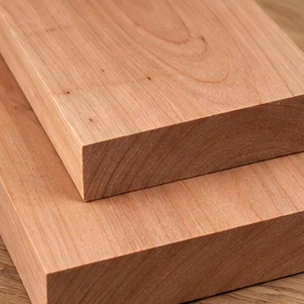
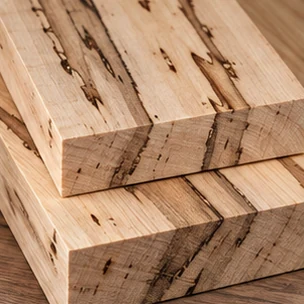
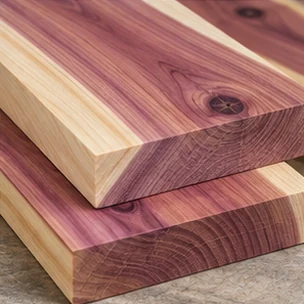
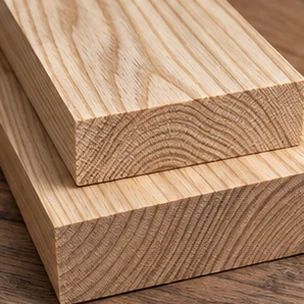
Start at the lumber stack. Hickory boards vary sharply from board to board. When you need a uniform façade (drawer banks, long door rails, a continuous tabletop), pick boards with similar face color and a comparable sapwood-to-heartwood ratio. If you want contrast and movement, deliberately mix sapwood boards with darker boards for rhythm.
For visible panels and rails favor quarter-sawn or rift-cut faces when stability and straighter grain lines matter. Plain-sawn faces deliver the most dramatic cathedral grain and color contrast — excellent for rustic or high-contrast designs but harder to match across wide surfaces.
Lay out face panels before you mill. Arrange boards in the order they will be glued or installed, step them out on the floor or a large table, and take photos. Bookmatching, center-matched panels or alternating sapwood/heartwood patterns are all valid approaches — but only after you’ve previewed the assembled effect.
Milling and joinery: deal with hardness and movement
Hickory is dense and tough. Use sharp carbide cutters and take conservative cuts to avoid burning or tearout. Plan for extra machine wear — keep blades, cutters and jointer knives sharp and check for chatter on planers. For narrow, critical parts such as rails and stile profiles, ramp up feed rates and use light finishing passes for a clean edge.
Because it moves more than many domestic species, design joinery to accommodate seasonal movement. For wide panels, use floating-panel construction and leave frames with slotted or elongated fastener holes to allow the panel to expand across the grain. For heavy tops that must remain flat, use glued edge joints with enough clamping pressure and reinforce with biscuits or splines; consider a shallow spline or twin-dowel layout to keep joints aligned without over-constraining movement.
When building table tops, consider a laminated top made from matched faces to minimize cup and twist. If you add a breadboard end, fasten it with grab screws or tapered plugs in elongated holes so the main top can still lengthen and shorten across the grain.
Finishing: test, pre-condition and control contrast
Hickory accepts finishes unevenly — pale sapwood will react differently than darker heartwood and mineral streaks will draw or repel dyes. Before finishing project parts, mill a scrap from the same lot, sand it exactly as your production pieces will be sanded, and run finish trials with your actual sequence (sealer, stain or dye, topcoat). That mock-up will reveal whether you need a pre-stain conditioner, a dye wash to even tone, or a tinted sealer to mute contrast.
If you want to reduce dramatic contrast: use a dye or water-thin pigmented stain as a first coat rather than relying on clear finishes. If you want the strongest natural look: finish tests will show which clear systems deepen the heartwood and how much sapwood will 'pop.' Note also that oil finishes tend to deepen tones and emphasize contrast; most polyurethanes and conversion finishes darken the wood less, but they can raise the grain on hickory — so make a final sand and de-nib between coats.
Tannins and streaks: don’t assume hickory will be neutral — test for tannin bleed with your chosen topcoat, especially in multi-coat systems. If tannin or dark streaks are present, seal early and consider a shellac or stain sealer as a barrier coat before topcoats.
Practical layout, acceptance and shop flow
Order extra boards for matching: always buy more material than your net requirements. You’ll need spares for face selection, clamping errors and finish testing. When receiving an order, reject or flag boards with severe twist or extreme sapwood spikes if you need uniformity.
Acclimate and store: sticker boards flat and let them come to your shop’s relative humidity before final milling. Plan your production so you dimension and match faces after acclimation; that reduces surprises like cupping or gap development in edge-glued panels.
Label and document: keep tight photo and layout records of how you paired faces for a table top or a run of casework. That record helps you reproduce a look if you need repair parts later, and it prevents accidental re-mixing of boards during finishing.
Specification and decision checklist for buyers and designers
When specifying hickory in a contract or quote, be explicit about the desired face appearance (plain-sawn vs. quarter-sawn; sapwood percentage; clear vs. character grade), the acceptable amount of color variation, and whether veneer or solid faces are preferred for wide panels. If you need a consistent color across many pieces, specify a finish mock-up approved before production begins.
For heavy commercial pieces such as work tables or restaurant tops, specify laminated construction or engineered substrates for dimensional stability and make clear expectations for repairability (e.g., replaceable breadboard ends, removable top fastenings).
Where to see material and take the next step
If you’re planning a job, create a small mock-up from the same lot of hickory you intend to use and run it through the full finish sequence. That single step resolves most questions about final color, contrast and movement.
For more details on available dimensions, grades and to source boards for matching and mock-ups, see the Hickory Lumber product listing (hickory-lumber) on Rarewood Exchange or contact Rarewood Exchange with your layout photos and desired face appearance — start from the boards you can see, test first, then build.
BEFORE YOU REQUESTYour sourcing checklist.
- Specify desired face (plain-sawn, quarter-sawn/rift) and acceptable sapwood-to-heartwood ratio
- Order extra board feet for face selection, matching and finish testing
- Require photos or inspect boards on arrival for twist, cupping and extreme color contrast
- Confirm grade—clear vs. character—and whether knots or mineral streaks are acceptable
- Request a small sample or cut-off for finish testing with your chosen topcoat system
- Plan for acclimation time in your shop before final milling and glue-ups
Common questions.
Will hickory stain evenly across heartwood and sapwood?+
Not without preparation. Heartwood and sapwood accept stain and dyes differently. Run finish tests on scrap from the same lot. If you need an even tone, use a dye or pigmented wash coat followed by a sealer, or employ a tinted sanding sealer to reduce contrast before topcoats.
Should I use solid hickory or veneer-faced panels for wide surfaces?+
For very wide panels or runs where movement and color control are priorities, veneer-faced panels over a stable substrate are a practical alternative. If you use solid hickory, choose quarter-sawn faces, design for movement (floating panels, elongated fastener holes) and accept that seasonal movement will be greater than a veneered assembly.
Do I need special cutters or tools to mill hickory?+
Use sharp carbide cutters and keep tools in excellent condition. Hickory’s density is hard on knives and blades; expect to resharpen more often and use light final passes to avoid tearout. Pre-drill pilot holes for screws in narrow rails and thin parts.
How do I control cupping and warping in a wide hickory tabletop?+
Mill and glue matched faces from the same lot, use balanced lamination (alternate grain facing), acclimate stock before final dimensioning, and consider mechanical reinforcement such as splines, biscuits or under-structure to keep the top flat while allowing some across-grain movement.