Thesis — when itaúba makes sense
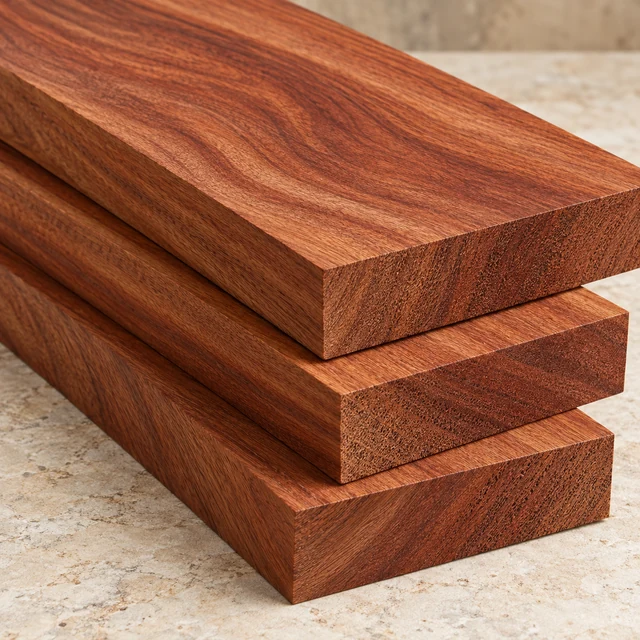
Itaúba is a tropical hardwood buyers reach for when durability and outdoor longevity matter. Its heartwood is typically yellow-brown to golden and is known for strong natural durability against decay and insects. Those qualities make itaúba a logical candidate for heavy-duty exterior work, long-lasting decking, and high-wear interior floors or tops—provided you plan for its density, tooling needs, and species variation at specification time.
One important purchasing note: “itaúba” is a trade name used for several South American hardwoods. Botanical identity and performance can vary by lot. Always confirm the supplier’s botanical name and lot characteristics when you specify structural use or long production runs.
Exterior decking: where itaúba excels and what to plan for
Why choose itaúba for decking: its natural rot resistance and toughness make it a good option for boardwalks, docks, patios and heavy-use decks. It weathers to a stable grey if you leave it unfinished, and it resists insect attack better than many domestic species.
Practical details to include in the spec: expect heavy board weights and hard-to-cut grain—plan for extra labor and heavier equipment for cutting and lifting. Use stainless-steel fasteners or tested coated fasteners; verify your fastener manufacturer’s compatibility with tropical hardwoods and the supplier’s tannin content. End-seal all cut ends, provide consistent gapping for drainage and drying, and design for airflow beneath decking to reduce trapping moisture.
Tooling and maintenance: routing and crosscutting will blunt tools quickly—use carbide cutters, reduce feed rates, and plan sharpening cycles. For slip resistance and long-term color control, decide up front whether you’ll oil, stain, or allow natural weathering; oiling improves appearance but requires maintenance. Always test finish adhesion on the exact lot because tropical woods can carry surface oils.
Exterior millwork and structural members
Itaúba shows up in exterior millwork—trim, exposed beams, posts and other structural-looking pieces—because it resists decay and can hold up in exposed conditions. For visible trim and mouldings it provides a warm yellow-brown aesthetic that darkens with UV exposure.
Caveats for load-bearing or treated applications: don’t assume a trade name guarantees structural grade or treatment compatibility. If you need engineered or code-rated members, require the supplier to confirm botanical identity, drying method, and whether the timber has been evaluated for structural use. If in-ground contact or preservative treatment is required, ask the supplier about acceptance of pressure treatment and how seasoning and species interact with preservative uptake.
Joinery and finishing: itaúba machines well when you slow down and use sharp carbide tooling. Pre-bore for screws in thinner members to avoid splitting. For exposed joinery, plan a finish system that accepts or blocks tannin migration and test compatibility with your chosen coatings.
Heavy-use flooring: strengths and installation choices
For heavy commercial or industrial floors, itaúba’s wear resistance and durability are strong positives. Where impact resistance and long service life matter—stair treads, heavy-traffic corridors, boat houses—itaúba can outperform many temperate species.
Installation tradeoffs: solid-nailed flooring can be difficult because the wood’s hardness increases nail drive stress and tool wear; adhesive installations require field testing for bond with the chosen adhesive. Consider engineered flooring panels with an itaúba wear layer when installation speed, dimensional stability, or engineered subfloor conditions are priorities. Prefinished or factory-sanded planks reduce on-site sanding of a hard species and help control final appearance.
Finish and maintenance: select finishes designed for high-traffic use and test for tannin bleed-through. Factor in that finish repair on very hard species can be more laborious; plan for maintenance intervals rather than assuming a one-time finish.
Furniture and interior millwork
Itaúba makes attractive furniture—tabletops, benches, heavy-casework and accents. The heartwood’s color and straight-to-slightly-interlocked grain plane to a pleasant surface and can take a range of finishes.
Shop practice: carbide tooling and high-speed cutters produce cleaner edges; light climb-cut passes reduce tear-out on figured boards. Because itaúba can be dense and abrasive, expect shorter cutter life and set tool replacement into job costing. Test your glue system on the actual boards; some tropical species are less predictable with certain adhesives. When gluing wide panels, allow for seasonal movement and use floating panel construction where appropriate.
Stock planning: for consistent color in visible furniture faces, commit to one lot or ask the supplier about mixing boards for color match. Where you need a stable, dimensionally predictable panel, consider veneering a dimensionally stable substrate with an itaúba face rather than using solid stock.
Specifying, buying and receiving: a checklist
A practical spec checklist to include in bids and POs: confirm botanical name and lot, request the product form (rough-sawn, surfaced, decking profile, or slabs), specify target moisture condition (and whether kiln-dried), list permitted defects and acceptable sapwood percentage, require straightness/flatness tolerances for visible millwork and flooring, and name acceptable fastening and finish testing procedures.
On delivery: inspect for correct species labeling, dimension and profile tolerance, excessive warp, checking or end splits, and for evidence of surface oils that affect finishing. Acclimate bundles under cover and off the ground to site conditions before machining. For large orders, ask for a representative sample board to use for test cuts, glue tests and finish trials.
Receiving, handling and storage
Because itaúba is heavy and dense, plan lifting and storage accordingly: use forklifts or multiple-person lifts and stack with stickers for even drying. Keep material under cover and protected from prolonged wetting, yet allow air circulation—trapped moisture accelerates checking. For decking, store boards flat and off the ground; for lumber to be machined, keep temperature and relative humidity steady to avoid rapid movement.
Always run early test cuts and finishes on the lot delivered. That’s the only reliable way to catch glue-adhesion problems, unusual streaking or finish incompatibility before you commit labor to a full project.
Bottom line
Itaúba is a strong choice when your priority is long-term outdoor durability or heavy-use longevity. The tradeoffs are weight, increased tooling and fastening demands, and the need to verify species identity and lot characteristics. If those tradeoffs fit your project plan and budget, itaúba can outperform many alternatives; if you need predictable structural grading or easier shop handling, consider engineered options or alternate species.
For dimension and profile options, test cuts, and to request a quote for itaúba lumber suited to decking, millwork, flooring or furniture, see the Itauba Lumber product page (itauba-lumber) and use a representative sample from the lot to validate glue, fastener and finish choices before production.
BEFORE YOU REQUESTYour sourcing checklist.
- Confirm botanical name and supplier lot (trade name 'itaúba' may cover multiple species)
- Specify product form: rough-sawn, surfaced, decking profile or slabs
- Request target moisture condition and drying method (kiln-dried vs. air-dried)
- State allowable sapwood, knots, checks and appearance grade for visible faces
- Require representative sample for tooling, glue and finish tests
- Ask about fastener compatibility and recommended stainless or coated fasteners
- Include end-sealing and storage handling instructions for delivery
- Agree acceptance criteria for warp, cup, twist and surface condition
Common questions.
Is itaúba a good choice for exterior decking?+
Yes—its natural durability and resistance to decay make it a strong option for exterior decking and boardwalks. Plan for heavier boards, use corrosion-resistant fasteners, allow for adequate spacing and airflow, and test finishes on a sample board from the lot before finishing the whole job.
Can itaúba be glued and finished like domestic hardwoods?+
Generally yes, but glue and finish behavior can vary by lot. Test your adhesive and finish on a representative sample; some lots may have surface oils or tannin content that affect adhesion or stain color.
What fastening methods work best with itaúba?+
Stainless-steel or manufacturer-tested coated fasteners are recommended for exterior use. Pre-boring for screws and using appropriate length and head type will reduce splitting; consult fastener specs and test on the lot.
Should I use solid itaúba or an engineered product for heavy flooring?+
If jobsite conditions or installation speed are concerns, engineered panels with an itaúba wear layer offer better dimensional stability and easier installation. For traditional solid flooring, expect more difficult nailing and potential on-site sanding challenges.
What should I inspect when the shipment arrives?+
Verify species labeling, check dimensions and profiles, inspect for warp, cupping, excessive checking or end-splits, and test a sample for finishing and gluing. Store off the ground and acclimate before machining.