Short answer: it can be, but confirm the species and heartwood
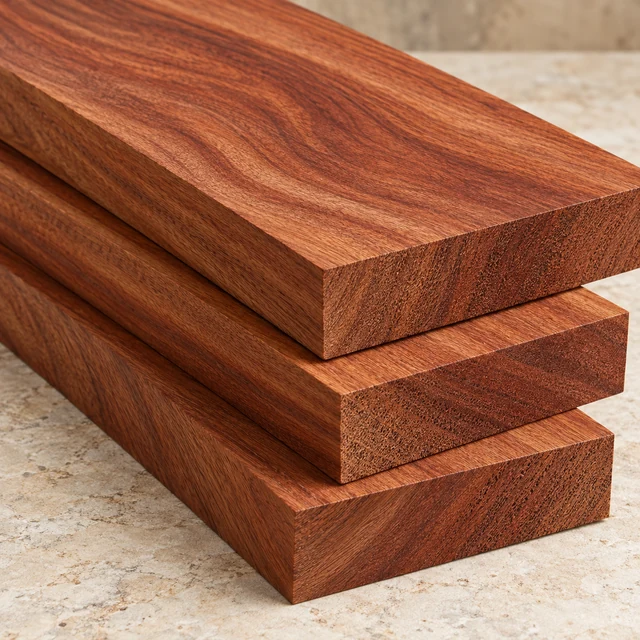
Santos Mahogany—often sold under the trade name Cabreuva—appears in the marketplace under a few botanical labels. That ambiguity matters: durability and behavior vary between closely related tropical hardwoods and between heartwood and sapwood in any lot. Before you approve Santos Mahogany for an exterior decking spec, confirm the supplier's species / botanical name and that the boards are primarily heartwood.
When the product is true Cabreuva (Santos Mahogany) and you have heartwood boards with little or no sapwood, the material is commonly used for heavy interior work and some protected exterior applications. But don’t assume that every shipment labeled “Santos Mahogany” will have the same durability—ask the seller to confirm species identity and sapwood percentage on the product page or quote.
What to expect from natural durability and structural behavior
Santos Mahogany heartwood is a dense tropical hardwood that often shows good resistance to decay compared with many temperate species. That resistance is a practical advantage for decking, but it’s not uniform: sapwood has little decay resistance and should be excluded or epoxied/isolated in exterior work.
Like other tropical exotics, Santos Mahogany will move with moisture change. Expect seasonal width and cupping tendencies in wide boards if you don’t control grain orientation and layout. Where exposure is heavy (ground contact, saturated environments, hot humid climates), specify materials with a proven exterior track record or choose markedly more decay‑resistant decking species.
Pre‑build and treatments: sealing, finishes, and shop prep
Shop‑prepping boards pays off. Plane and sand all faces and edges before assembly, seal end grain on every board, and apply at least one coat of your chosen exterior finish to the underside and the faces prior to installation. Sealing end grain slows moisture exchange and reduces cupping and checking.
Finishes: penetrating oil finishes with UV inhibitors give a natural look and are easy to reapply, but they require frequent maintenance on a horizontal walking surface. Film finishes or spar varnishes will protect the surface longer but will abrade and require recoat and occasional sanding. Because tropical exotics can be oily, test your finish and adhesion on sample pieces from the same lot before committing to a full finish schedule.
Avoid relying on exterior adhesives for structural decking unless the adhesive supplier certifies compatibility with oily exotics and the adhesive will receive long‑term exposure testing for your climate.
Fasteners, metal compatibility, and detailing
Use corrosion‑resistant fasteners. Tropical hardwoods contain extractives and tannins that can accelerate corrosion of ordinary steel. Specify stainless steel fasteners (A2 or A4) for surface screws and hidden‑clip systems; silicon bronze or hot‑dip‑galvanized fasteners are sometimes acceptable but check compatibility with the particular lot and local codes.
Pre‑drill pilot holes for face screws and countersink when needed—dense tropical hardwoods split and generate very high insertion torque. If you plan clip‑fastening, verify the clip manufacturer considers the species’ hardness and surface oiliness; some clip adhesives and clips themselves can fail sooner on oily surfaces.
Detail drainage, slope, and air flow. Good flashing and an elevated, ventilated substructure reduce long‑term moisture exposure. Avoid trapping water at board ends or against stringers; design for drainage and drying.
Layout choices that reduce movement and increase life
Prefer narrower boards and quartersawn or rift sawn pieces where possible—these orientations reduce cupping and seasonal movement compared with wide flatsawn boards. When you must use wide boards, incorporate crossblocking, midspan support, and plan layout sequencing to minimize adjacent wide‑board movement issues.
Stagger end joints, avoid end grain sitting on ledger or joist tops, and seal all cut ends. Give thought to board orientation relative to prevailing sun and rain; boards exposed to intense sun on one face and shade on the other are more likely to cup.
Maintenance: realistic long‑term expectations
Even well‑detailed Santos Mahogany decking will change appearance and require upkeep. Expect color change (the surface will weather and often silver if left unfinished) and gradual surface wear in traffic areas. Plan a maintenance schedule that includes periodic cleaning, inspection for split ends or loose fasteners, and reapplication of the chosen finish.
Penetrating oils typically need re‑application at a higher cadence (annual to multi‑year depending on exposure and product), whereas film finishes can go longer between recoats but require more involved repairs when they fail. Budget for occasional localized sanding and replacement of damaged boards—don’t treat the wood as maintenance‑free.
Spec checklist before approving Santos Mahogany for decking
Before you sign off on exterior decking built from Santos Mahogany, confirm these items with your supplier and on the product page: botanical / species identification, that the delivered boards are predominantly heartwood, grade and allowable sapwood percentage, whether the lot has been kiln dried and its current moisture content, and the recommended fastener type for that lot.
Insist on prefinish testing on sample boards from the same shipment, and add contract language requiring replacement material if delivered stock contains excessive sapwood or unacceptable defects for exterior use.
BEFORE YOU REQUESTYour sourcing checklist.
- Confirm botanical identity and that the seller’s lot is Cabreuva / Santos Mahogany heartwood
- Request sapwood percentage and reject lots with significant sapwood for exterior decking
- Specify kiln‑dried or conditioned stock and request current moisture condition on delivery
- Decide finish system and require pre‑finish adhesion tests on sample boards
- Specify stainless or otherwise corrosion‑resistant fasteners and requested pilot boring
- Include end‑grain sealing and shop‑priming of both faces and edges before installation
Common questions.
Is Santos Mahogany as rot‑resistant as ipe or other heavy tropical decking timbers?+
No decking species performs identically across climates. Santos Mahogany heartwood is often decay‑resistant compared with temperate hardwoods, but it is not universally on the same level as the most decay‑resistant exotic decking species. Where extreme exposure or ground contact is expected, specify a species with a documented exterior service record for your climate.
Can I use hidden clip systems with Santos Mahogany?+
Yes, but test first. Oily extractives can affect clip adhesives and some fastener types. Use stainless clips rated for dense hardwoods and perform a pull‑out test with boards from the actual shipment before full installation.
How often will I need to refinish a Santos Mahogany deck?+
Refinishing frequency depends on the finish type and exposure. Penetrating oils typically need more frequent reapplication; film finishes last longer but require more aggressive repair when they fail. Plan for periodic cleaning and inspection, and be prepared to reapply surface protection on a regular maintenance schedule.
What should I check on delivery?+
Verify species identification, confirm the lot is heartwood with minimal sapwood, check board moisture condition, inspect for splits or checks at ends, and ensure dimensions and grade match your purchase order.