Thesis: pick soft maple when you need maple’s look at a lower cost — but know its limits
Soft maple is a trade grouping often used by mills and distributors to describe maple species that are not the dense “hard” (sugar) maple commonly specified for wear surfaces. That grouping commonly includes red maple and silver maple, among others — so the name is a cue, not a precise botanical identity. Ask your supplier which species and lot you’ll receive and require that identity where it matters.
The practical decision is simple: choose soft maple when you want a pale, even maple appearance for furniture, cabinets, trim or painted work and prefer a lower upfront material cost than sugar maple. Do not choose it where maximum surface hardness, wear resistance or scratch resistance is a project requirement unless you accept the tradeoffs and protective details described below.
Visual goals and appearance: where soft maple helps — and where it doesn’t
Soft maple reads like maple: light, fine texture and generally subtle grain. It is excellent when you want a uniform, pale surface for clear finishes, light-toned stains, or white- or pastel-painted millwork. It also makes a good match when you want maple accents that won’t compete with figured or darker face woods.
If your design depends on tight, consistent figure (for example, a maple tabletop that must match sugar maple panels) test and approve sample boards from the actual lot. Soft maple can show wider color variation and occasional mineral streaks compared with sugar maple. For stain‑matching across batches, plan for mockups, and consider dyes or toner coats rather than relying on a single wipe stain to hide lot-to-lot differences.
Machining and finishing tradeoffs: workability is good, but finishing needs thought
Soft maple machines cleanly with sharp cutters: it planes, routers and mills with predictable grain behavior in most cuts, and it sands to a smooth surface easily. Because it is less dense than sugar maple, it cuts with less stress on tooling, which can be an advantage in high-volume shops.
Because soft maple is softer, it dents and bruises more readily during production and installation. On furniture and millwork that will see hard daily use, add protective design features — rounded edges that hide minor dings, sacrificial trim, or durable surface finishes. When clear finishing, test for blotching and color variation: use a pre‑finish sealer or grain‑filling approach and approve a finished sample. For painted work, soft maple accepts primer and paint well and is often a better substrate than knotty, resinous woods.
Cost versus performance: where the dollar matters and when to spend more
Soft maple is typically offered at a lower price point than hard (sugar) maple. That makes it attractive when the visual language of maple is required but the highest wear performance is not. Typical appropriate uses include cabinetry, casework, painted trim, interior millwork, drawer parts, and shop fixtures.
Avoid soft maple for heavy-wear horizontal surfaces where hardness matters — high‑traffic flooring, stair treads, heavy tabletops or cutting surfaces — unless you plan to reinforce the design (metal aprons, protective tops, replaceable wear strips) or accept a shorter life against denting and abrasion. For demanding surfaces, specify sugar maple or another denser hardwood instead.
Substitution strategies: when to pick soft maple, and when to choose alternates
If you want a pale, smooth face for clear finish but need greater hardness, switch to hard (sugar) maple and test match for tone and grain. If price or availability pushes you from sugar maple to soft maple, expect a visible but subtle change in grain and possibly a need for different finishing steps to equalize tone.
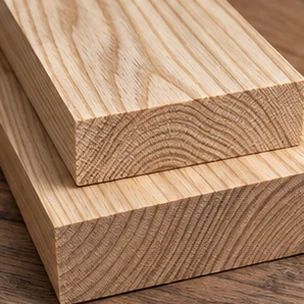
When paint is the goal, poplar is a common, lower‑cost alternative to soft maple and is very stable and paint‑friendly; however, poplar’s grain and density are different, and it can show green or brown fibers that need primer attention. For a slightly more pronounced grain with better wear than soft maple, consider ash or white oak where the visual direction allows it. Always mock up the most visible pieces before committing a full lot.
Ordering, receiving and on‑the‑job care: what to specify and check
When you request soft maple, include the following in your purchase or specification: confirmed species or trade lot identity, grade or appearance standard (with photos or board examples if matching is critical), cut (plain or quartered), dimensions and tolerance, and kiln‑dried to the target moisture content you need for your shop or jobsite. Ask the supplier to confirm the lot and provide a small sample board for stain testing.
On receipt, check for sticker stain, warp, loose knots and color variation; tag and set aside boards that require face selection. Acclimate the lumber to your shop conditions and sequence parts so boards from the same bundles are used across a single run for color consistency. For finishing, build a small, finished sample that travels to the site or owner for approval before you commit full production.
BEFORE YOU REQUESTYour sourcing checklist.
- Confirm the supplier’s trade definition of “soft maple” and the species in the lot (red maple, silver maple, etc.)
- Require an appearance or grade standard and request sample boards or photos of the actual lot
- Specify cut (plain/flat sawn vs quarter sawn) if stability or figure matters
- State dimensional tolerances and the intended final thicknesses
- Specify kiln‑dried to the target moisture content for your environment and note acclimation requirements
- Request stain/finish test panels from the lot before large production
- Inspect delivered boards for sticker stain, warp, and consistent color; keep lot segments for matching
Common questions.
Is soft maple a good choice for painted millwork?+
Yes. Soft maple is frequently used for painted millwork because it machines smoothly and takes primers and paints well. It is often a better choice than knotty or resinous species. For best results prime promptly after light sanding and test for any green or grey fiber discoloration on the lot.
Can I use soft maple for a dining table or countertop?+
You can, but expect more vulnerability to dents and scratches than with sugar (hard) maple or other dense hardwoods. For a table or counter that must resist heavy use, either choose a harder face wood or design protective details (aprons, metal insets, replaceable top strips) and select a robust finishing system.
How do I get consistent stain across a run of soft maple?+
Mock up with boards from the actual lot and use a finishing sequence that controls absorption: consider a dye or toner undercoat, a tested sealer, or a pre‑stain conditioner. Approve a finished sample and sequence boards from the same bundle to minimize visible variation.
Is soft maple stable enough for cabinet doors and panels?+
Yes. Soft maple works well for doors and panels when panels and frames are dimensioned properly and stock is acclimated. For wider panels, use appropriate joinery and consider quartered face material to reduce cupping and movement.