When beech is the right choice — short thesis
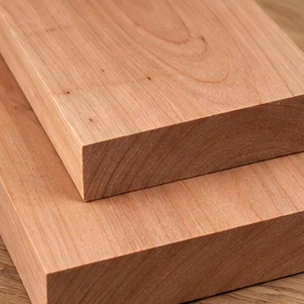
Beech is a workhorse domestic hardwood: pale, fairly uniform, close-grained, and mechanically sound for bent components, turned items, and many kinds of interior millwork. Pick beech when you need a stable, tight-grained blank that machines cleanly, glues reliably, and gives a consistent background for painted or clear finishes. Where it is weak is in natural figure and warm heartwood color—if dramatic grain or deep walnut-like tones are the brief, another species is a better match.
Visual and mechanical strengths by application
Furniture: Beech makes excellent structural parts—legs, rails, stretchers—and flat panels for painted or oiled cases. Its straight, even grain reads neutral under paint and dyes, and sawn face quality is predictable across boards. For exposed furniture where you want a pale, consistent look, beech competes with maple and birch.
Turning and small shop projects: Beech turns and sands to a smooth surface and responds well to steam-bending, which is why it’s common for chair parts, tool handles, mallets, and small turned items. Its density gives good weight and tactile feel in hand tools and kitchen utensils. On the lathe, keep tools sharp—beeches' fine grain takes a burnished finish easily.
Millwork & cabinetry: For paint-grade millwork, beech is a solid choice thanks to uniform color and low figure. It glues well and yields good joints for edge-gluing and rail construction. For stained, open-grain visible work, you’ll need to consider grain-filling or choose a wood with more pronounced figure depending on the aesthetic.
Practical checks before you accept a lot (furniture and millwork focus)
Grade and cut: Confirm the grade and whether boards are flatsawn or quartersawn. Quarter-sawn pieces are worth asking for where stability and straight grain are critical (legs, long rails, wide panels).
Drying & acclimation: Verify that the boards are dried to the target moisture content for your shop/installation environment. If you build without acclimating, expect movement. Don’t accept boards with active end-checking or fresh splits along the growth rings.
Surface quality & defects: Inspect for radial cracks, heavy sapwood proportion, blue or black iron stains, and pitch pockets. Beech generally has low figure; reject lots with cross-grain, heavy twist, or large knots in pieces intended for visible faces.
Flatness & cupping: Run a straightedge across boards and look for cup or twist beyond what you can plane out. For components intended to be edge-glued into panels or tops, try mating boards to test joint quality and runout.
Millroom trial cuts: If possible, cut a test sample for glue-ups, routing, and finishing to confirm glue absorption, tear-out behavior with your cutters, and final surface color under your intended finish.
When to choose maple, birch, or ash instead
Choose maple when you need a very pale, tight, closed-grain face for clear finishes, or when you want better figure options (soft or hard maple) and high abrasion resistance. Maple also tends to take dye and clear finishes with less blotching than beech in many cases.
Choose birch for paint-grade millwork or plywood-faced applications where the goal is a uniform, affordable substrate that sands and paints predictably. Birch panels and lumber are often easier to match across lots for painted doors and case interiors.
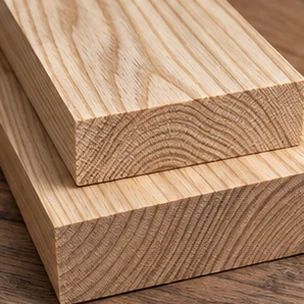
Choose ash when you want a pronounced, open grain and a stronger springy characteristic—useful where visible grain is part of the design or where bending and shock resistance are required. Ash stains to highlight grain in ways beech will not.
In short: if your primary requirement is neutral, paintable surfaces and structural parts, beech is appropriate. If you need pronounced figure, very pale clear-finish surfaces, or a different bending/strength profile, pick maple, birch or ash to match that requirement.
Machining and finishing tips that matter in the shop
Machining: Use sharp cutters and take light finishing passes—beeches' fine grain takes a glassy surface but can burn with dull tools or high-feed benchwork. When planing wide faces, go slower and consider climb-planing a light final pass to eliminate tear-out. For routing edge profiles, back up with a sacrificial fence to avoid tear-out on the underside.
Gluing and fasteners: Standard PVA glues bond beech well. For long, narrow joints and chair components consider dowels, biscuits, or lamination to ensure alignment—edge joints can slip without proper registration. Pilot holes for screws are recommended in dense beech to avoid splitting.
Finishing: Beech can be prone to blotching with some pigmented stains. For even stains use a conditioner, pre-stain sealer, or use gel stains that sit on the surface rather than penetrating. For clear finishes, thin coats and sanding-sealer will produce a consistent effect. If you want a warmer tone, consider controlled steaming or dyes rather than heavy pigmentation—test on the lot first.
Turning: On the lathe keep tools keen, cut at appropriate speeds for your blank size, and use light finishing cuts to bring out the smoothness. Be mindful of tear-out on end grain—sand progressively and finish with a thin paste wax or shellac base coat before oiling.
Ordering, receiving and storage checklist
Order: Specify product form, grade, sawn orientation (quarter/flat), and any required drying target. Include allowable defect types and a tolerance for cup, twist, and straightness.
Receiving: Inspect for sticker stain, active checking, and lot uniformity. Reject or segregate boards with unacceptable defects before storage.
Storage & acclimation: Sticker and stack to allow airflow, then let material acclimate in the shop until dimensional equilibrium with the workshop environment is reached. Machine and assemble only after acclimation to minimize later movement in finished assemblies.
If you want to learn more about specific sizes, grades, or to request a delivered quote, see the Beech Lumber product page (beech-lumber) for available runs and details on how to order.
BEFORE YOU REQUESTYour sourcing checklist.
- Confirm grade and sawn orientation (quarter vs flatsawn)
- Specify product form (boards, flitches, blanks) and target drying/MC for your region
- Inspect for end checks, twist, blue/iron stains, and excessive sapwood
- Request a test sample for machining and finishing trials
- Require stickered stacking and clear labeling on delivery
- Plan acclimation time in your shop before fabrication
Common questions.
Is beech a good choice for paint-grade doors and trim?+
Yes—because of its uniform grain and pale, consistent face, beech is often chosen for paint-grade doors and trim. Make sure the lot is straight and free of large knots; sanding and a good primer will produce a predictable painted surface.
Will beech take a stain evenly for a natural finish?+
Beech can blotch with penetrating stains. Use a pre-stain conditioner, a thin pigmented sealer, or gel stains for more even color. Always test the exact lot and your finish sequence on scrap before committing to a full run.
Can I steam-bend beech for chair parts?+
Yes—beeches' cellular structure is friendly to steam-bending and it’s commonly used for curved chair components and laminated bending. Use tight grain, defect-free pieces and proper steaming/pressing schedules for best results; test bends before final production.