Quick answer: match lot identity and drying to the use
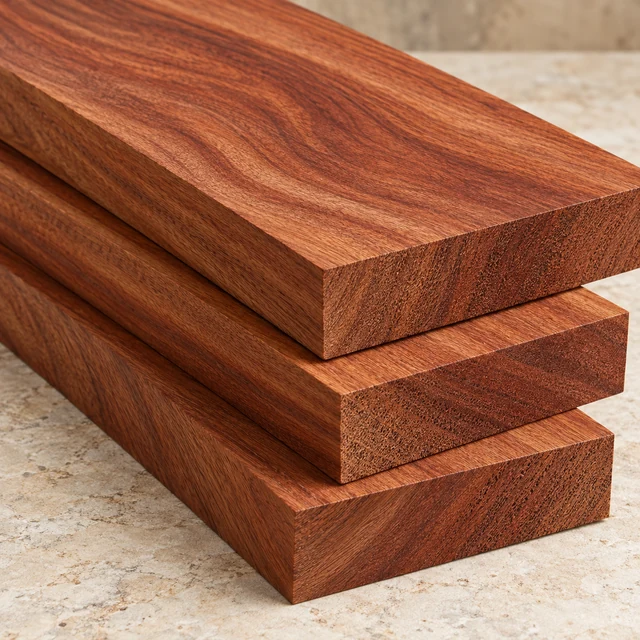
Sucupira (sold in the trade as Brazilian Chestnut) is a dense, durable South American hardwood used for everything from heavy‑use outdoor decking to fine furniture. The right lot for a kitchen table is not always the right lot for an exterior boardwalk. Your first priorities are 1) confirm exactly which species/lot you’re being offered, and 2) confirm how the lumber was dried and conditioned. Those two facts determine whether a shipment is best for interior visible work, flooring, or exterior decking.
Species and naming: why you must confirm identity
“Sucupira” is a trade name used in South America for more than one botanical species. Appearance, density, grain behavior and durability can vary between those species and between individual harvest lots. Ask your supplier for the botanical name or an authoritative lot description, plus photos of actual boards. If the supplier cannot identify botanical identity, treat the lot as a variable appearance and ask for physical samples before committing to a visible application.
For specification language: require the supplier to state the botanical name on the quote and packing list, and to provide high‑resolution photos of the exact boards to be shipped. For architectural work, include a requirement for sample approval and a mock‑up panel from the same mill run.
Drying and movement: what to demand for each application
Dense, oily or tannin‑rich hardwoods behave differently depending on how they were dried. Slow, controlled drying reduces internal stress and checking; improper drying increases the chances of end‑splits, surface checks and movement after installation.
Interior furniture and flooring: insist on a drying record and a supplier statement that boards have been conditioned to a stable state appropriate for your building environment. For visible casework and wide boards, choose lots that have been kiln‑conditioned and allowed to equalize in the shop or jobsite before machining. Ask whether the mill used reduced temperatures or stress‑relief cycles—dense hardwoods commonly need gentler schedules.
Exterior decking: for outdoor use you want lumber that will accept wet/dry cycles without catastrophic splitting. A lot that was air‑dried slowly and finished with adequate surface sealing can be excellent for decking; likewise, kiln‑dried lots that were conditioned for exterior use can work. Ask for information on how the lot behaved in previous outdoor installations, and insist the supplier show end‑sealed sample boards before you commit to a large order.
Choosing grades and cut for visible interior work
Appearance matters: for furniture and interior flooring pick lots with the fewest knots, checks and mineral streaks. Request clear or select grade material and photos of representative boards. If you need stability and a straighter grain, ask for quartersawn or vertical‑grain material—when available—because it moves less across its width than flatsawn boards.
Be realistic about figuring: Sucupira can show interlocked or wavy grain and strong color contrast. If you are using wide boards or bookmatched panels, insist on matching from the same flitch and accept that surface preparation and finish decisions will influence the final look.
Tooling and machining: dense tropical hardwood dulls cutters faster than domestic species. Plan to use carbide tooling, reduce feed speed where tearout is a risk, and test router cuts and edge profiles on the actual lot. Always condition and acclimate boards to the shop before final surfacing to avoid surfacing checks.
Decking and outdoor durability: what to test and expect
Sucupira is commonly used for exterior decking because of its density and resistance to wear. However, outdoor performance depends on the specific lot, prior drying, and how you detail and finish the installation.
Before a big job, order sample decking boards from the same lot and expose them in local conditions for several months—look for checking, splitting, fungal discoloration and how quickly the surface grays. In addition to a visual test, install a short mock‑up with intended fasteners and attachment details so you can evaluate screw holding, how the wood accepts pilot holes, and whether countersinking or plugs will be necessary.
Specification notes for decking: insist on end‑sealing freshly cut ends, pre‑drilling for screws, and specifying a finish or maintenance plan (oiling, UV inhibitors, or allowing natural weathering). For commercial projects, include acceptance criteria tied to a pre‑approved sample board and require the supplier to supply the same appearance grade for the full order.
Practical buying, receiving and shop handling tips
What to ask the supplier: botanical name, drying method and conditioning data, photographs of the exact boards, sawing orientation (flatsawn vs quartersawn), and whether boards were dressed or rough‑sawn. Request a small number of extra boards for grain matching and test cuts.
Receiving and inspection: open crates on arrival, check a cross‑section of boards for checks and end splits, and measure representative pieces after 24–48 hours in your conditioned shop to ensure they’re stable. If a lot shows excessive internal checking or end‑splits, do not accept before resolving with the supplier.
Shop practices: use sharp carbide cutters, pre‑drill for fasteners, seal end grain, and keep dust collection and respiratory protection in use. Finish trials on sample boards are essential—Sucupira can take different stain and oil systems differently depending on its lot and surface preparation.
Decision flow: how to choose a lot for your project
1) Confirm botanical name and request photos of the exact boards. 2) Ask for drying/conditioning notes and whether samples can be exposed locally. 3) For interior furniture/flooring: require kiln conditioning and sample approval; choose quartersawn for stability where needed. 4) For decking: run a local exposure and fastener‑holding mock‑up, accept some natural weathering, and require end‑sealing and pre‑drilling instructions. 5) Add acceptance criteria to your purchase order tied to the approved sample board.
When in doubt, buy a small trial quantity from the exact lot and build a mock‑up before committing to a large run. For more detailed supplier comparison criteria and the exact product offering, see the Brazilian Chestnut (Sucupira) Lumber product page.
BEFORE YOU REQUESTYour sourcing checklist.
- Botanical name and mill/lot identification (do not accept generic trade name alone)
- Photographs of the exact boards to be shipped (full‑length, end grain and face)
- Drying method and conditioning data (ask if stress‑relief or low‑temperature schedule used)
- Requested sawing orientation (flatsawn vs quartersawn) and grade for appearance
- Samples for finish testing and mock‑up approval from the same lot
- Information on prior outdoor installations for decking lots (references/photos)
- Agreement on end‑sealing, pre‑drilling, and delivery tolerance
- Plan for receiving inspection and acceptance criteria tied to approved sample
Common questions.
Can I use any Sucupira lot for exterior decking?+
Not automatically. Many Sucupira lots perform well outdoors, but performance depends on species identity, prior drying, and how the lumber was handled. Require a mock‑up exposure and pre‑drilling test from the same lot before committing to a large decking order.
Which lots are best for visible furniture or flooring?+
Choose clear/select grade boards with minimal checks and knots and request quartersawn material where dimensional stability is essential. Always approve a physical sample from the same lot before beginning production.
How should I specify drying for an interior project?+
Require the supplier to provide drying/conditioning notes and to confirm that boards were conditioned for stable shop humidity. Include an acclimation period in your schedule and acceptance testing on representative boards.
Does Sucupira need special tooling or finishing?+
Plan on carbide cutters and slower feed speeds—dense tropical hardwoods blunt tools faster. For finish, run trials on the actual lot; dense woods sometimes need sanding and solvent wiping to achieve consistent stain or oil absorption.