Thesis — what to lock down in the spec
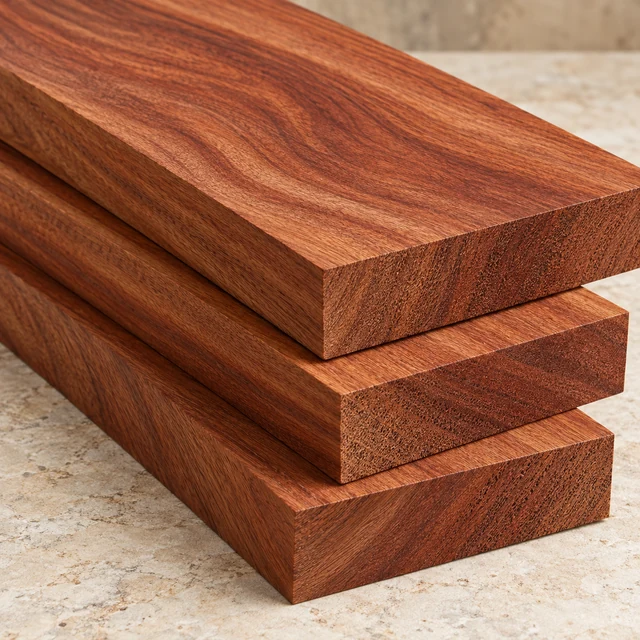
Sucupira (sold as Brazilian Chestnut) is an attractive, dense exotic hardwood used for furniture, millwork and heavy-use surfaces. To avoid surprises at delivery or in the shop you must lock down five things in the written specification: the botanical identity, an appearance/grade definition, exact dimensional requirements with tolerances, the wood’s moisture condition and how acclimation will be handled, and a clear sample-approval plus delivery/inspection procedure.
Below I walk through each item with the practical language to put directly into a purchase spec or RFP and the inspection steps your shop will use when the material arrives.
Botanical name and lot identity — don’t rely on the trade name
“Sucupira” and “Brazilian Chestnut” are common trade names that can refer to more than one botanical species in South America. For a specification state the commercial name and require the supplier to confirm the botanical name(s) and a lot identifier in writing before cutting or shipping.
Sample language to include: “Provide commercial name Brazilian Chestnut (Sucupira) and list the botanical name(s) for the lot. Include supplier lot number and mill certificate; do not substitute other species without written approval.” This prevents a different species arriving under the same common name.
Appearance and grade — define exactly what you will accept
Common grading words (Select, FAS, furniture grade, rustic) mean different things to different vendors. Describe the appearance you want: acceptable color range, amount and size of knots, presence of sapwood, streaking or mineral deposits, bark inclusions, and whether live edge or knots are acceptable.
Attach at least three annotated photos or a standard sample board and state that delivered material must match the approved sample. Example phrasing: “Appearance: furniture-grade boards matching approved sample A1. Maximum percentage of open knots, repairs, bark pockets or sapwood shall be stated; supplier to provide representative photos before shipping.”
Dimensions, tolerances and planning for yield
Specify the exact finished or rough dimensions required and how you will measure them. For each dimension state the nominal size and the allowable tolerance, and make clear whether thickness is measured before or after surfacing.
Also describe how you will treat bow, cup and twist limits and how boards will be measured for length and width acceptance. If you need a certain amount of clear, defect-free width for furniture components, state the minimum clear face width per board. Ask the supplier to report expected yield—how much material of the required clear width you should expect from the lot—so you can plan lamination or matching.
Moisture condition, drying method and acclimation
State the required moisture condition on delivery and whether the lot should be kiln-dried or air-dried. Don’t leave “dry” undefined: require the supplier to report current average moisture content for the lot and the method used to measure it (type of moisture meter or lab test).
Include an acclimation plan: where the wood will be stored on site, for how long it must stabilize before machining, and the acceptable moisture range before the first glue-up or finish application. If your project controls indoor humidity tightly, make that part of the spec so the supplier can match the expected equilibrium moisture content.
Sample approval, photos and communication before shipment
Require a physical sample or a set of unedited photos from the specific lot with board tags and a ruler or scale in frame. The sample should include an edge and face view so you can judge grain, sapwood, end-checking and surface condition.
Write this into the order: “Supplier to provide representative photos and either a physical sample or labeled board ends for approval prior to shipment. Reference lot to product page brazilian-chestnut-sucupira-lumber when requesting photos and delivered quote.” This is the point to correct color, figure or grade mismatches before the material moves.
Delivery, receiving inspection and claims
Define a clear receiving window and inspection steps that the truck driver and warehouse staff will follow. Require the supplier to identify the lot on each board or bundle and to deliver packing lists and the moisture report with the shipment.
For acceptance criteria, list the checks your crew will run on arrival: count and board lengths, random moisture checks, visual match to approved sample, check for warp and end-checks, and inspect packing. State how long you have to submit visible defect claims and how hidden defects (found after surfacing) will be handled. Example: “Visible discrepancies reported within 48 hours of delivery; hidden defects reported within the first machining run and supported by photos and retained samples.”
BEFORE YOU REQUESTYour sourcing checklist.
- Commercial name plus confirmed botanical name(s) and supplier lot number
- Attach approved sample (photo and/or physical) and require delivered material to match that sample
- Specify exact nominal dimensions and clear tolerances for thickness, width and length; state how bow/cup/twist will be measured
- State required moisture condition, drying method (kiln or air) and how moisture will be reported
- Require pre-shipment photos of the actual lot with board tags visible and ruler/scale in frame
- Define delivery marking: lot number on each board or bundle, packing list and moisture report included
- Set explicit acceptance tests on arrival and time windows for visible and hidden defect claims
- Request supplier yield estimate for clear, defect-free widths and expect a discussion of expected waste
Common questions.
Do I need the botanical name if the seller calls it Sucupira?+
Yes. ‘Sucupira’ can refer to more than one species. Require the supplier to confirm the botanical name(s) for the lot in writing and to supply a lot number before shipment.
How should I set dimensional tolerances?+
State the exact finished or rough dimensions you need and how you measure them. Rather than vague wording, specify whether thickness is before or after surfacing, and define acceptable warp limits and how you will measure them on arrival.
What moisture information should the supplier provide?+
Ask for the average moisture content for the lot, the drying method used, and the measurement method. Also include an acclimation plan—where the wood will be stored and the acceptable moisture range before machining or gluing.
Can I rely on photos alone to approve a lot?+
Photos are useful but only if they are unedited, show labeled board ends, and include scale. For critical furniture work request a physical sample or a single approved board to be held until final acceptance.
What should my shop inspect at delivery?+
Verify lot and board counts, check board tags against the packing list, run spot moisture readings, visually match material to your approved sample, and inspect for obvious warp, end-checks, or shipping damage. Record and photograph any discrepancies immediately.