Goal and quick prescription
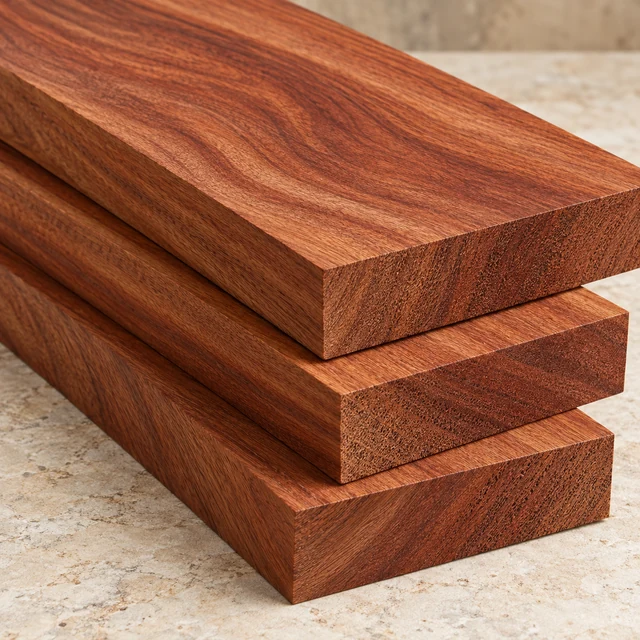
Chechen is prized for bold color and streaking, but that same character is what makes lot-to-lot appearance unpredictable for large panels. The specification goal is simple: force decisions up front (which look you accept), require supplier verification from a single lot, and supply finished and unfinished sample panels that will be the acceptance standard.
This guide gives the practical items to include in a contract or purchase order: required photos, assembled sample panels, explicit grade and lot notes, moisture content certification, and an inspection/acceptance process so you don’t get surprised at installation.
Know what you are locking down (appearance decisions)
Before writing clause text, decide which appearance characteristics are mandatory versus allowed variation. Typical decisions: overall range of ground color, presence and frequency of dark streaks, orientation of streaks (radial versus tangential), and acceptable sapwood or mineral streaks.
Decide whether you want bookmatched panels, running-match panels, or random orientation. For bookmatching you must require mirrored veneer or board sequence from the same flitch or run; for solid-board panels insist on sequential board selection from the same shipping lot. Finally, decide if finish behavior (how the wood darkens or pops with oil/varnish) is part of acceptance—if so include a finished sample.
Minimum specification elements to include
1) Species identity and lot: Require the supplier to state the trade name and the supplier’s lot number. Because trade names can represent different botanical sources, add language that the buyer may require botanical or origin confirmation when species identity matters to the project.
2) Appearance photos: Require high-resolution photos of each board proposed for the job taken flat on a neutral background and labeled with board ID, board face, and board dimensions. Include end-grain photos that show pores and streaking patterns. Require at least one photo of the proposed trim layout or bookmatch pair where applicable.
3) Sample panels: Require two assembled sample panels made from material from the same lot as the intended shipment—one left unfinished and one finished using the project finish system. Specify panel size, orientation, and edge construction (for example, 24" x 24" glued-up panel, face veneer sequence or solid-board edges). State that these samples are the acceptance standard for color and streaking.
4) Grade and cutting notes: Specify the lumber grade or visual grade rules to be applied (for example: allowable knots, fill, sapwood limits, and how mineral streaks are handled). If you require a particular cut (plain-sawn, quarter-sawn) call that out and require the supplier to mark the cut on each board.
5) Moisture content and drying statement: Require the supplier to state the delivered lot moisture content and the target equilibrium moisture content for the project environment. If you have a shop or jobsite target MC, put it in the spec as [target MC %]. Require a certificate showing measured MC for a representative sample of boards and state an allowable tolerance (for example, use a placeholder [±x%] you choose).
6) Lot matching and quantity tolerance: Require that all production material for a job be supplied from a single lot or explicitly identify how many lots are acceptable, and that any lot split requires buyer approval with new acceptance samples.
Practical clause language (copy-ready with placeholders)
The buyer can paste the following directly into a spec, replacing placeholders: "Appearance: Panels must match the supplied Acceptance Sample Panels (one unfinished, one finished). Supplier will provide high-resolution photos of each board and end-grain prior to shipment. Species: 'Chechen' (supplier to confirm botanical identity on request). Lot: All material for this contract must come from a single lot identified as Lot #[LOT NUMBER]."
"Moisture content: Delivered material must be within [TARGET MC %] ± [TOLERANCE %] as measured by oven-dry equivalent or calibrated moisture meter. Supplier will provide MC measurements for a representative sample of boards and sign the certificate of conformity."
"Acceptance sample: Supplier will pre-build two 24" x 24" panel samples from the proposed lot—one unfinished and one finished with the specified finish system—and ship both to Buyer. These samples will be the color and streaking acceptance standard for all production material."
Inspection, acceptance, and remedial steps
Spell out inspection timing and consequences. Typical steps: supplier submits photos and sample panels; buyer approves or rejects within a stated review window; if approved, supplier ships production from the approved lot; buyer inspects material on receipt against the acceptance sample. If the delivered material deviates materially from the acceptance sample, require supplier to replace or rework the non-conforming boards at supplier cost.
Include shipping and handling expectations that preserve appearance: label boards, use stickers that won’t stain faces, and protect edges. Require a minimum number of extra boards (waste allowance) for edge- and color-matched layout so the shop can blend streaking during assembly.
On the shop floor and in the field: layout and finishing notes
When you assemble panels, sort for flow. For chechen’s streaking, do mock layouts dry (no glue) to see streak runs and decide on bookmatch or randomization. Cut sample panel sections from the accepted sample and trial the finish specified for the project—chechen can change substantially with oil and topcoat, so a finished sample is not optional if appearance is critical.
Record which faces were used for the sample (face-up or face-down in sanding, grit sequence, sealing steps) and require the same preparation on production material. That reduces surprises when the installed panels are in their final finish.
Supplier confirmation and tying back to the product page
Ask the supplier to confirm, in writing, that the quoted lot meets the spec and to attach the required photos and the two acceptance panels to the quote. For projects using Rarewood Exchange’s product offering, reference the product page Chechen Lumber and the supplier’s lot number so everyone knows which catalog listing and lot are connected to the acceptance samples.
If you need a template to send to vendors, adapt the 'Practical clause language' above and require the supplier to return photos and MC certificates with the quote. Insist on pre-approval before production begins; that is the single most effective way to avoid costly rework and mismatched panels on site.
BEFORE YOU REQUESTYour sourcing checklist.
- Decide appearance rules before you request quotes (what streaking and color are acceptable).
- Require supplier to confirm lot number and species/trade name; request botanical/origin confirmation if critical.
- Ask for high-resolution face and end-grain photos of every board proposed for the job.
- Require two acceptance sample panels from the same lot—one unfinished and one finished with the project finish.
- Include a moisture content target and require a moisture certificate for the delivered lot (use placeholders for your target and tolerance).
- Specify grade rules (allowed sapwood, knots, mineral streaks) and cut orientation (plain/quarter) if relevant.
- Require buyer approval of photos and samples before production and require lot-level shipping/labeling.
- Include remedial language: rejection remedies, replacement responsibilities, and waste allowance for layout.
Common questions.
How large should the acceptance panels be?+
Choose a panel size that makes the visual effect of streaking clear—commonly 24" x 24" or larger. The important point is that the panel shows how streaks move across joins and how the finish affects color; require one unfinished and one finished sample.
Can I accept multiple lots if I need a large quantity?+
You can, but only with an explicit lot-split plan. Require separate acceptance samples for each lot and buyer approval for each. Where absolute visual continuity is required, source all production from a single lot.
What photos should I require before approving a lot?+
Photos of the full board face(s) on a neutral background with board ID and dimensions, close-ups of streaks or mineral lines, and end-grain images. For veneer or bookmatching, include paired photos showing the match.
What if delivered material shifts color after acclimation?+
Include an acclimation and inspection clause: allow a defined acclimation period after delivery, then inspect against the acceptance sample. If panels materially differ, require the supplier to remediate per the contract.