Why this guide matters for turning chechen
If you plan to turn pens, knobs, small bowls, or decorative inlay from chechen, the decisions you make before you mount the blank determine whether the piece is a pleasure to machine or a steady battle with tearout, glue failures, or finish problems. This guide focuses on what to specify when buying blanks, how to set up tools and the lathe, simple turning techniques to reduce tearout, and an efficient sample-test workflow for glue and finishes.
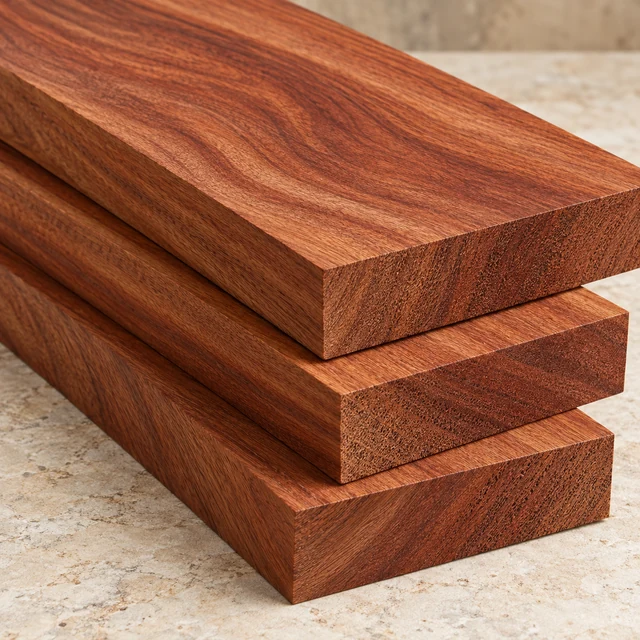
Chechen can vary from lot to lot — grain direction, figure, stability and surface oils differ across boards. Before you place an order for blanks, confirm the specific lot and appearance with the chechen-lumber product page and arrange any requested milling (quartersawn blanks, resawing, or stabilization). Treat the product page as the authoritative reference for the lot you will receive.
Selecting clear blanks: what to ask for and inspect
For turned small parts you want clear, well-centered blanks that minimize grain runout and allow strong tenons. Ask your supplier for pieces specified as clear or furniture-grade and give exact blank dimensions (diameter × thickness) rather than board size. If you need matched pairs (pens, chess pieces), request blanks cut from adjacent boards or the same board face to keep color and figure consistent.
When the blanks arrive inspect three things: moisture condition, grain orientation, and defects. Check moisture content with your meter and confirm that it matches your shop equilibrium; pieces that are wetter than your shop risk cracking as they dry. Mark the face and edges to note growth-ring orientation — blanks cut so the turning face is closer to radial (quartersawn) tend to behave better on thin-walled turnings and are less prone to cupping in bowl rims.
If the lot shows heavy figure, interlocked grain, or a polished/oily surface, plan a test blank for glue and finish trials (see the finish-testing section). For small high-value items consider ordering vacuum- or resin-stabilized blanks when available.
Lathe setup and tool choices
Sharp tools are the single biggest factor in clean cuts on any exotic hardwood. Start with sharp HSS or carbide-tipped gouges and scrapers. For dense or figured chechen, many turners prefer freshly sharpened HSS spindle gouges (HSS gives clean shearing if tuned correctly) and a low-angle scraper setup for a final cleanup pass.
Tool geometry: 60–80° skew-like bevel for shear cuts and a slightly higher rake on spindle gouges helps slice fibers rather than tear them. For scraper work, use light touch and allow the burr to do the cutting; several light scraper passes are better than one heavy pass. If you use carbide tools, take light, controlled passes and keep lathe speed moderate; heavy catches are harder to control in dense exotics.
Workholding: turn between centers for roughing and for thin-walled pieces use a robust chuck and support the work with a tailstock live center while finishing the final sides. For small spindles use a combination of a scroll chuck and friction drive to avoid chatter; always cut into the wood in a direction that reduces grain lift rather than across unsupported long fibers.
Turning techniques to reduce tearout and catches
Tearout happens when the tool lifts and tears fibers instead of cutting them cleanly. Reduce it by using shear cuts wherever possible — present the gouge so the bevel rides and the cutting edge slices down into the fibers. For runout-prone grain take very light cuts and increase tool presentation angle to shear the fibers.
A practical workflow: rough round at higher speed with large cuts, then slow the lathe and do a sequence of lighter passes, finishing with a shear scrape and a very light sanding. When you meet a change in grain direction—figure, knots, or a live edge—stop, reverse the cut direction for a short shear pass, or leave a small ridge to remove later with sanding rather than risk a catch.
When turning thin spindles or delicate forms, support the blank with a steady rest and make progressive reductions in diameter rather than trying to pull too much material at once. For small bowls and hollow forms consider using a negative-rake scraper on the final interior to avoid tearing the rim fibers.
Glue and finish testing: a fast, shop-friendly routine
Before gluing or finishing production pieces, put aside a scrap from the same blank or the lot and run quick tests. Glue test: try the adhesives you plan to use—thin CA, medium CA, epoxy, and hide glue—on small, planed surfaces. Verify bond strength and check for any inhibition (a slick, oily surface can resist some glues). If the scrap shows poor adhesion, prepare faces by sanding to fresh wood or wipe with denatured alcohol and retest.
Finish test: apply your intended finish system on a turned test sample in the order you would on the final piece (sealer, stain or dye if used, topcoat). Check for blotching, color shift, and drying time. For small turned parts, thin CA and friction polish are common because they cure quickly and give a glassy surface; wipe-on oils highlight figure but can affect subsequent CA adhesion unless fully cured and sanded.
Stabilization: if the lot is inconsistent in stability or you need superior durability for jewelry, knife scales or pen blanks, consider resin stabilization. Stabilizing reduces movement and often improves the surface response to cutting and finishing, but it is a supplier-dependent option — request it when ordering or be prepared to stabilize blanks in your shop.
Ordering, receiving and a practical buying checklist
When you order blanks for chechen turning, be explicit: give final turned diameter and thickness, request clear or furniture-grade where needed, say if you need quartersawn orientation or matched sets, and ask the seller to confirm moisture content and whether the lot has been sticker-dried or kiln-dried. Reference the chechen-lumber product page when confirming the lot so both you and the supplier are aligned on appearance and milling options.
On receipt measure moisture content, perform the glue/finish test on a scrap from the lot, label blanks with orientation and intended use, and store them flat, stickered and protected from rapid humidity swings. Keep a record of the lot number or invoice tied to your test results so future orders can match successful lots.
BEFORE YOU REQUESTYour sourcing checklist.
- Specify final turned diameter and thickness rather than raw board size.
- Request clear/furniture-grade blanks and indicate if quarter-sawn orientation is preferred.
- Ask supplier to confirm lot appearance, moisture content and drying method (reference the chechen-lumber product page for lot confirmation).
- Order matched blanks from adjacent cuts for pairs or sets.
- Request stabilization from the supplier or plan to stabilize wet or highly figured blanks in-shop.
- Plan for glue and finish tests on a scrap from the exact lot before production.
- Arrange for end-sealing and crating that prevents rapid humidity changes during shipping.
Common questions.
Is chechen a good choice for pens and small turned objects?+
Chechen can make beautiful small turnings when you start with clear, stable blanks and use sharp tools. Because visual character and stability can vary by lot, buy test blanks or request matched pieces and perform the glue/finish tests described above before full production runs.
What causes the most tearout and how do I avoid it?+
Tearout most often comes from tool geometry, dull edges, and cutting across unsupported fibers. Use freshly sharpened tools, take light shear cuts, support thin sections with a steady rest or tailstock, and finish with a low-angle scraper or sanding rather than heavy final cuts.
Which adhesives work best for small chechen parts?+
There’s no single best choice for every lot. Use a test scrap to compare thin and medium CA for quick assembly, epoxy for gap-filling or high-moisture service, and hide glue where reversibility is useful. If the lot feels oily, prepare the mating surfaces by sanding to fresh wood and retest.
Should I stabilize chechen blanks?+
For high-end pens, knife scales, jewelry, or very figured small parts, stabilization reduces movement and improves machining and finishing. Stabilization is a lot-dependent decision — request it from the supplier or stabilize a sample batch in-shop to see whether the extra step is needed.
How should I document successful lots for repeat orders?+
Keep the supplier lot number, a photo of the blank faces, your moisture reading, and the results of glue/finish tests. When reordering, reference the chechen-lumber product page and the successful lot number so the supplier can match appearance and milling.