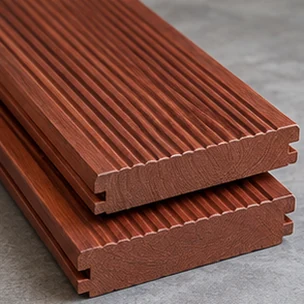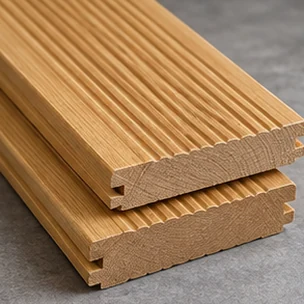
Hardwood decking
Garapa Decking
Practical guidance for selecting and working with Garapa decking: appearance, shop behavior, finish options, and what to confirm with suppliers before ordering.
Explore productThis guide helps you decide when to specify Ipe for an exterior deck versus other hardwoods by comparing durability, appearance, tooling impacts, maintenance expectations, and key specification items to lock down at quote time.
Ipe is a conservative, performance‑first choice: extremely dense, dimensionally stable, and very resistant to rot and heavy wear. That combination makes it the right choice where the deck will see high traffic, regular wetting (pool decks, marina walkways, public boardwalks), or where long service with minimal replacement is the priority.
If your project is lower‑use—private residential decks, covered porches, or designs where a softer visual character or a tighter budget matter—other tropical hardwoods (Cumaru, Garapa, Angelim, Sucupira) or high‑quality domestic species can deliver acceptable life and different aesthetics for less shop and fastener stress. The rest of this guide walks through the practical tradeoffs that should decide the specification.
Durability is two separate questions: resistance to decay and resistance to physical wear. Ipe is commonly chosen where both matter because it resists rot and abrasion under constant exposure. For decks that will be frequently wet, exposed to splash or standing water, or subject to heavy footwear, specify species known for high rot resistance.
Alternatives like Cumaru and Sucupira also have excellent service life and are appropriate where you want a similar performance profile but a slightly different color or grain. For shaded, covered, or lightly used residential decks you can prioritize surface look and cost over the highest rot‑resistance—this is where Garapa or some domestic hardwoods become reasonable options.
Ipe starts dark brown and can be specified for an even, uniform appearance or a more varied, rustic look. All tropical hardwoods will naturally silver to a gray patina if left unfinished; that’s a design choice. If the intent is to retain original color, specify an opaque or penetrating UV finish and include re‑application intervals in maintenance plans.
If matching existing material or achieving a particular visual scale matters, lock down lot‑level appearance in the spec: request a picture of the actual lot or an approved sample from the supplier. Species differ in grain, streaking, and tendency to have mineral streaks or pin knots—those are appearance decisions, not performance ones, and they should be spelled out in the quote.
Ipe’s density means heavier tooling wear and slower cutting. Expect to use carbide‑tipped blades and cutters, keep cutters sharp, and budget for shorter tool life than with domestic species. Plan cuts and joinery with this in mind—laminations and tabbing can be harder to plane and rout cleanly without fresh cutters.
Fasteners and detailing matter: dense tropical hardwoods can split if you don’t predrill near ends or use appropriate fastener types. For hidden‑fastener systems or face‑screws, specify stainless steel or silicon‑bronze fasteners and confirm compatibility with the decking profile. Clarify whether boards are grooved for clips or S4S for face‑screws.
Don’t assume ‘decking’ means the same thing from one supplier to the next. At quote time require: appearance grade (select vs character), finished thickness and width, profile (S4S, grooved, chamfered edges), and typical board lengths. Long, continuous boards reduce joints and fasteners but are also heavier and harder to handle.
Also ask for lot‑level manufacturing details: are boards pre‑milled and finished to thickness, or will you need to plane? Is the product kiln‑dried or air‑dried (and how long has it been in storage)? Confirm straightness, acceptable camber/cup tolerances, and whether the lot comes with a sample or photos for visual approval. For Ipe specifically, check the Ipe Decking product page (ipe-decking) for lot‑level specifications before final acceptance.
Choose Ipe when: the deck will see heavy public use, constant wet exposure, or when the owner wants the longest‑possible service life with minimal structural replacement. Also choose Ipe if you can accommodate the extra shop labor and stronger fastener materials in the bid.
Choose alternatives when: budget, visual character, or ease of machining are primary. Cumaru is a common high‑performance alternative; Garapa offers a lighter look with good decay resistance at a lower relative tool‑wear cost. For a covered residential deck where aesthetics are primary and the owner accepts routine maintenance, these alternatives often give better value.
All hardwood decking benefits from an initial finish decision: leave to silver naturally, apply a transparent oil to keep the brown color, or use a pigmented UV finish for stronger color retention. If color retention is desired, include a maintenance schedule in the spec because UV and moisture exposure will require periodic re‑application.
Finally, incorporate acceptance and storage instructions into the contract: inspect deliveries for straightness and cracks, store flat and dry, and keep boards acclimated unopened until installation. For Ipe orders, confirm the lot details on the Ipe Decking product page (ipe-decking) so the visual and milling expectations match the supplier’s actual inventory.
No decking is truly maintenance‑free. Ipe is low‑maintenance in the sense that it resists rot and wears well, but color retention requires periodic finishing if you want to avoid the natural gray patina. Also plan periodic cleaning and inspection of fasteners and joints.
Yes—because dense tropical hardwoods are prone to splitting and corrosion issues with incompatible metals, specify stainless steel or silicon‑bronze fasteners and confirm predrilling practices near ends. Also decide whether you want grooved boards for hidden‑clip systems or S4S boards for face‑screws.
Ipe is hard on cutters. Expect shorter life from standard carbide tooling compared with domestic hardwoods—use heavy‑duty carbide blades, keep cutters sharp, and plan spare tooling in the job budget.
Require a sample or photos of the actual lot and include visual acceptance criteria in the contract (color range, allowable streaking or knot allowance). For Ipe, check the lot‑level details on the Ipe Decking product page (ipe-decking) before shipping.
If the deck is lightly used, covered, or the owner prefers a different look or lower initial cost, choose a high‑performance alternative such as Cumaru or Garapa. Those species balance durability and machinability and can be the better value in non‑extreme exposure conditions.
Focused guides to the specification, application, and delivery questions behind this product.
Ipe is excellent for heavy outdoor furniture and exposed millwork if you design for its density and oiliness—use mechanical joinery, test adhesives on material from the same lot, pre-drill fasteners, and choose maintenance-friendly finishes.
Read this InsightUsing Ipe for exterior stairs and trim works well when you treat stair treads as a structural, safety‑critical element rather than simply reusing decking boards. Specify finished tread thickness and support, a safe nosing profile, a traction strategy that fits the design, joint details that allow movement, and corrosion‑resistant fasteners. Decide up front whether you will maintain the fresh Ipe color or allow it to silver, and require end‑grain sealing and a maintenance plan in the contract.
Read this InsightFor commercial boardwalks and other high‑traffic sites, specify Ipe with a heavier wear grade, purposeful surface profile for slip resistance, longer usable lengths to reduce joints, robust stainless or approved hidden fasteners with pilot‑hole protocols, and an explicit maintenance and spare‑parts plan. Tie procurement and staged deliveries to on‑site logistics and require mockups for wet performance.
Read this InsightA practical checklist for specifying Ipe on residential decks: confirm appearance and lot, choose board widths and layout, match fasteners and clips to dense hardwoods, decide whether to finish for brown or allow silvering, acclimate and test finishes on sample boards from the shipment.
Read this InsightPractical, shop-focused guidance to receive and store Ipe decking: prepare lifting and staging, inspect and document at delivery, stack flat with aligned stickers and breathable top cover, and stage boards for installation while monitoring moisture and mixing bundles for even appearance.
Read this InsightSpecify finished thickness, finished width, groove geometry, and the exact fastener or clip model on the PO; require clip-fit samples and supplier confirmation of pilot-hole and embedment so Ipe’s density won’t surprise the field.
Read this InsightSpecify board dimensions, edge profile and length mix before comparing decking quotes.
Read this InsightPractical guidance for selecting and working with Garapa decking: appearance, shop behavior, finish options, and what to confirm with suppliers before ordering.
Explore productMassaranduba decking is a very dense, tropical hardwood sold for exterior decking and heavy-use outdoor projects; confirm species, grade, and moisture with the supplier before specifying.
Explore product