Long service life potential
Ipe’s density and natural durability make it a common choice where long-term wear resistance and low replacement frequency are priorities.
Wood, with a clear specification
Also searched as Brazilian Walnut, Lapacho
Ipe decking is a category of very dense tropical hardwood sold for exterior decking and heavy-duty outdoor woodworking. Confirm species identity, finished dimensions, surface form, and moisture for the specific lot before specifying or ordering.
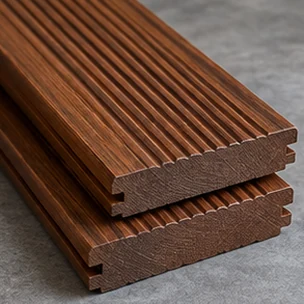
This product entry covers Ipe sold in decking lumber form. The trade name refers to dense tropical hardwood used for exterior decking; exact species, cut, and surface condition are lot-specific. Confirm the supplier’s lot declaration before specifying by species or finish.
Ipe’s density and natural oils make it a durable exterior decking option but also influence machining, fastening, and finishing choices. Contractors, architects, and buyers should plan for heavier tooling wear, pre-drilling for fasteners, and evaluation of finish adhesion on the chosen lot.
Ipe’s density and natural durability make it a common choice where long-term wear resistance and low replacement frequency are priorities.
When installed correctly with appropriate fasteners and spacing, Ipe produces a stiff, wear-resistant deck surface suitable for high-traffic areas.
Rich brown tones provide a premium look; owners can retain the color with finish maintenance or allow natural silvering for a low-maintenance aesthetic.
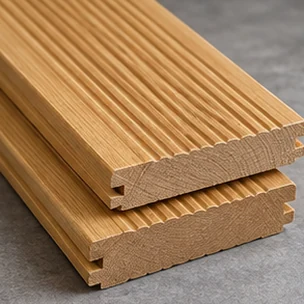
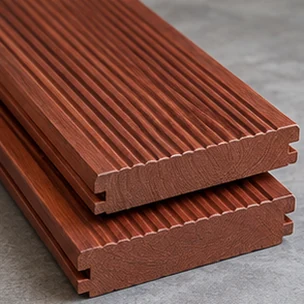
Boards can be grooved for clip-style fasteners to produce clean faces and reduce exposed screw heads, subject to board thickness and supplier form.
| Feature to confirm | Why it matters |
|---|---|
| Declared species or trade name | Trade name alone can cover multiple species; species affects appearance and performance expectations |
| Finished dimensions and tolerances | Actual width/thickness determines compatibility with fasteners and load design |
| Usable lengths and length distribution | Match board lengths to layout to minimize joints and waste |
| Surface condition (S4S, rough, grooved) | Determines finishing prep, clip compatibility, and installation workflow |
| Grade or appearance selection | Sorting for color and defects affects final deck uniformity and aesthetic |
| Moisture documentation or recommended acclimation | Helps reduce movement after installation and informs on splitting risk |
| Fastener compatibility and recommended hardware | Dense wood needs corrosion-resistant fasteners and may require pilot holes |
| Quantity basis and minimum order | Impacts ordering units, shipping quotes, and job staging |
Do not accept unlabeled lots for projects where species identity, dimensions, or moisture are project-critical; require lot confirmation in the supplier quote.
Ipe is characteristically very dense and hard. Expect heavy wear on cutters and saw teeth; carbide or diamond-tipped tooling is recommended. The wood machines cleanly with sharp cutters but will dull ordinary high-speed steel quickly.
Fastening usually requires pre-drilling for face screws and pilot holes for plugs or hidden fasteners. Many installers prefer stainless steel fasteners; confirm recommended fastener type with your builder and the supplier’s lot notes.
Ipe contains natural oils that can interfere with glue and some finishes. For glued or finished details, clean bare cut surfaces and follow manufacturer guidance for adhesion. When planning a finish, test adhesion on a sample from the lot before committing.
Like all hardwoods, Ipe moves with changes in moisture; acclimate decking components as directed by the supplier and secure boards to allow for seasonal movement. Confirm moisture documentation for the lot when movement is a critical concern.
This decking lumber is suited to exterior decks, boardwalks, stair treads, trim, and heavy-duty outdoor millwork where high wear resistance and long service life are priorities. For furniture or interior millwork, verify surface and grade before ordering.
Ipe is often chosen for commercial and high-traffic residential decks because of its longevity and wear resistance, but it requires the right fasteners, appropriate edge details, and attention to tooling and finishing.
When evaluating quotes, compare species identity (or supplier species declaration), grade or visual selection, actual finished dimensions, usable lengths, surface condition, confirmed physical form (grooved, S4S, rough), and any moisture documentation.
Quantity basis (board feet or linear feet), minimum order quantities, and whether the supplier will pre-sort by color/grade are practical details that affect installation planning and final appearance.
Plan a receiving area that keeps bundles dry and off the ground. Inspect bundles on arrival and compare a representative sample to the lot declaration in your quote.
Store boards flat with stickers to maintain straightness and allow air circulation. Long-term outdoor storage before installation accelerates weathering and color change; store under cover if you plan to keep original color.
High-end homes use Ipe for long-lasting, low-deflection decks. For residential work confirm board widths and finish expectations, and plan for pre-drilling and stainless fasteners.
Ipe’s wear resistance and longevity suit high-traffic commercial projects. Contractors should specify decking grade, splinter control, and fastener systems appropriate to the structural design.
Treads, stair risers, and exterior trim benefit from Ipe’s durability, but detail design must allow for movement and edge wear; anti-slip considerations are important on treads.
Where high durability and a dense surface are required — benches, planters, heavy tables — Ipe can be used in structural outdoor millwork when joinery and finishing are planned for oily, dense wood.
Specify species or accept trade-name lots, finished dimensions, minimum usable lengths, required surface form (S4S, grooved, rough), grade sorting, and total quantity. Ask the supplier to confirm lot identity, payment, and freight terms in the quote.
Plan for heavy bundles and arrange lifting/handling equipment for delivery. Inspect bundles on arrival against the packing list and a sample board. Record any discrepancies immediately before accepting shipment.
Store flat, stickered, and protected from direct ground contact and weather. Keep boards under cover if you do not want them to weather gray; allow airflow to prevent moisture trapping that can promote staining.
Practical guidance for selecting and working with Garapa decking: appearance, shop behavior, finish options, and what to confirm with suppliers before ordering.
Explore productMassaranduba decking is a very dense, tropical hardwood sold for exterior decking and heavy-use outdoor projects; confirm species, grade, and moisture with the supplier before specifying.
Explore productFocused guides to the specification, application, and delivery questions behind this product.
Ipe is excellent for heavy outdoor furniture and exposed millwork if you design for its density and oiliness—use mechanical joinery, test adhesives on material from the same lot, pre-drill fasteners, and choose maintenance-friendly finishes.
Read this InsightUsing Ipe for exterior stairs and trim works well when you treat stair treads as a structural, safety‑critical element rather than simply reusing decking boards. Specify finished tread thickness and support, a safe nosing profile, a traction strategy that fits the design, joint details that allow movement, and corrosion‑resistant fasteners. Decide up front whether you will maintain the fresh Ipe color or allow it to silver, and require end‑grain sealing and a maintenance plan in the contract.
Read this InsightFor commercial boardwalks and other high‑traffic sites, specify Ipe with a heavier wear grade, purposeful surface profile for slip resistance, longer usable lengths to reduce joints, robust stainless or approved hidden fasteners with pilot‑hole protocols, and an explicit maintenance and spare‑parts plan. Tie procurement and staged deliveries to on‑site logistics and require mockups for wet performance.
Read this InsightA practical checklist for specifying Ipe on residential decks: confirm appearance and lot, choose board widths and layout, match fasteners and clips to dense hardwoods, decide whether to finish for brown or allow silvering, acclimate and test finishes on sample boards from the shipment.
Read this InsightPractical, shop-focused guidance to receive and store Ipe decking: prepare lifting and staging, inspect and document at delivery, stack flat with aligned stickers and breathable top cover, and stage boards for installation while monitoring moisture and mixing bundles for even appearance.
Read this InsightThis guide helps you decide when to specify Ipe for an exterior deck versus other hardwoods by comparing durability, appearance, tooling impacts, maintenance expectations, and key specification items to lock down at quote time.
Read this InsightSpecify finished thickness, finished width, groove geometry, and the exact fastener or clip model on the PO; require clip-fit samples and supplier confirmation of pilot-hole and embedment so Ipe’s density won’t surprise the field.
Read this InsightSpecify board dimensions, edge profile and length mix before comparing decking quotes.
Read this InsightIpe is a trade name that covers very dense tropical hardwoods commonly marketed as Brazilian walnut or lapacho. Because botanical identity can vary, specify whether you need a declared species or will accept the supplier’s trade-name lot; require the supplier to confirm species, provenance, and any declarations in the quote.
Because this decking is very dense, plan to pre-drill for face screws and use corrosion-resistant fasteners (stainless steel is common). Hidden-fastener systems are widely used but check compatibility with the board thickness and whether the supplier offers pre-grooved boards.
Suppliers may offer different surface conditions. Some lots arrive S4S and ready for finish application; others are rough or pre-grooved. Confirm the board surface, whether ends are coated or sealed, and that the supplier’s quote documents the lot, payment, and freight terms before ordering.
Send your volume, destination, and key specifications. A broker can follow up with availability and commercial terms.