Hardwood decking
Garapa Decking
Practical guidance for selecting and working with Garapa decking: appearance, shop behavior, finish options, and what to confirm with suppliers before ordering.
Explore productUsing Ipe for exterior stairs and trim works well when you treat stair treads as a structural, safety‑critical element rather than simply reusing decking boards. Specify finished tread thickness and support, a safe nosing profile, a traction strategy that fits the design, joint details that allow movement, and corrosion‑resistant fasteners. Decide up front whether you will maintain the fresh Ipe color or allow it to silver, and require end‑grain sealing and a maintenance plan in the contract.
Ipe is an excellent material for exterior stairs and trim because of its density, natural durability, and wear resistance. Those same characteristics also make the material less forgiving of poor detailing: narrow treads, unsupported overhangs, trapped water at joints, or incompatible fasteners will expose even the hardest wood to premature failure or user-safety problems.
Treat the decision as more than “use the same decking boards.” Specify how the boards will be formed into treads or trim, and explicitly call out the performance details — load support, slip resistance, movement allowance, corrosion resistance of fasteners, and end‑grain protection — so the finished stairs perform for years with minimal unexpected maintenance.
Match the cross‑section of a stair tread to its structural role. Treads generally need a heavier cross‑section and closer supports than flat decking. For stair treads that will carry concentrated foot traffic, use boards or laminated pieces milled to a robust finished thickness and plan continuous or closely spaced blocking underneath. Avoid using single thin decking boards as freestanding treads unless they are fully supported on multiple joists or a substrate.
Nosing and edge profile are both safety and wear decisions. A well‑designed nosing gives a positive foot placement, sheds water, and protects the tread edge from direct wear. Favor a radiused or eased nosing over a sharp square edge for comfort and to reduce splintering. Where nosings are exposed to heavy use, consider a replaceable nosing detail — a separate trim piece fastened to the tread — so the worn element can be replaced without rebuilding the whole tread.
Ipe’s smooth, dense surface can become slippery when wet. Choose an anti‑slip approach that fits the project’s look and maintenance plan rather than relying on a single default.
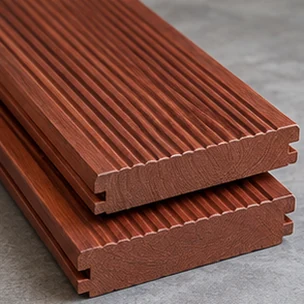
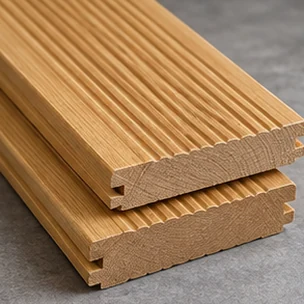
Common, durable options: saw‑cut grooves across the tread width (shallow grooves cut in the factory or on site), factory or field‑applied abrasive strips set into routed slots, and discrete coarse‑grit inlays in the nosing. Grooves provide a near‑invisible look that wears with the board; abrasive strips give immediate traction but are a visual element and require attention to how they are fastened. Avoid permanent coatings that form thick films unless you accept a scheduled recoating plan — some coatings hide the wood’s grain and complicate future repairs.
If using anti‑slip inserts or strips, specify stainless steel countersunk fasteners or hidden mechanical anchors and a method to prevent water intrusion at screw heads (sealed plugs or filled countersinks).
Ipe moves with moisture and temperature changes; stair treads and trim need joint details that allow movement without opening visible gaps or creating pinched end grain. Use slotted fastener holes or elongated clips where boards are screwed to supports so each board can expand and contract in place.
Pay special attention to end‑grain at risers, miters, and landings. Seal end grain at fabrication and again after installation. Wherever possible, slope treads away from structures and avoid flat pockets where water can collect. At landings, provide a small, consistent gap or a compressible weatherstrip to accommodate movement and to avoid water being driven into joints.
For nosings that butt into stringers or trim: prefer a small reveal or a beveled contact surface rather than a tight butt. That prevents the nose from binding as it expands and protects adjacent trim from splitting.
Specify fasteners rated for dense tropical hardwoods and exterior exposure. Stainless steel fasteners are the standard choice; avoid plain steel or plated fasteners that will corrode and stain the wood. Pre‑drilling is essential when screwing near edges or into narrow sections of Ipe to prevent splitting.
Hidden-fastener systems preserve a clean look but must be specified to accept the finished tread thickness and allow for movement. If you use face screws, locate them where they can be plugged and sealed, and plan to countersink and fill the holes with a compatible plug or sealant to keep moisture and dirt out.
When trimming or machining Ipe, use carbide cutters and allow for quicker tool wear than with softer temperate woods. Mill parts slightly oversized if you plan to sand to a final dimension after shaping and finishing.
Decide at the outset whether the stair will be left to age to a stable silver patina or whether you want to preserve the fresh Ipe color. Maintaining the original color means using UV‑stable penetrating oils formulated for Ipe and a maintenance schedule to reapply as the coating weathers. If the owner prefers the silvered look, accept that surface oils will need to be stopped and that periodic cleaning is the primary maintenance.
Seal end grain and underside surfaces at fabrication to slow moisture exchange and reduce differential movement. For trim elements that are painted or stained, follow paint‑manufacturer recommendations for adhesion to dense tropical hardwoods and remember that film finishes on exterior horizontal surfaces will require periodic maintenance.
Plan for in‑field touchups: keep a small store of matching material for replaceable nosings or trim, and note fastener types and supplier details in the project handover for future repairs.
When you order Ipe for stairs and trim, include finished tread thickness, nosing profile, anti‑slip method, fastener type and finish, end‑grain sealing, and whether treads are pre‑machined or milled on site. If the supplier offers a pre‑manufactured stair tread product, compare its finished dimensions and fastener compatibility to your stringer layout before committing.
For more on finished dimensions and fastening, consult the product details for Ipe Decking and related guidance on specifying finished dimensions and fastener compatibility for Ipe decking.
You can use standard decking boards, but only when they are sufficiently supported and when their finished cross‑section matches the tread’s structural and wear requirements. For freestanding treads or long spans, specify heavier sections or laminated treads and plan for closer blocking under the tread.
Shallow, factory‑cut transverse grooves give a discreet, low‑profile solution that retains the wood appearance. If you need higher traction, combine grooves with a concealed abrasive insert at the nosing or use slim abrasive strips set into routed slots.
Use corrosion‑resistant fasteners (stainless) and pre‑drill holes near edges. Where movement must be accommodated, use slotted holes or specialized clips that allow the board to expand and contract without binding.
Yes — preserving the fresh color requires a UV‑stable penetrating oil applied soon after installation, followed by periodic reapplication. If you prefer the low‑maintenance weathered silver, avoid film finishes and use cleaning rather than ongoing oiling.
Focused guides to the specification, application, and delivery questions behind this product.
Ipe is excellent for heavy outdoor furniture and exposed millwork if you design for its density and oiliness—use mechanical joinery, test adhesives on material from the same lot, pre-drill fasteners, and choose maintenance-friendly finishes.
Read this InsightFor commercial boardwalks and other high‑traffic sites, specify Ipe with a heavier wear grade, purposeful surface profile for slip resistance, longer usable lengths to reduce joints, robust stainless or approved hidden fasteners with pilot‑hole protocols, and an explicit maintenance and spare‑parts plan. Tie procurement and staged deliveries to on‑site logistics and require mockups for wet performance.
Read this InsightA practical checklist for specifying Ipe on residential decks: confirm appearance and lot, choose board widths and layout, match fasteners and clips to dense hardwoods, decide whether to finish for brown or allow silvering, acclimate and test finishes on sample boards from the shipment.
Read this InsightPractical, shop-focused guidance to receive and store Ipe decking: prepare lifting and staging, inspect and document at delivery, stack flat with aligned stickers and breathable top cover, and stage boards for installation while monitoring moisture and mixing bundles for even appearance.
Read this InsightThis guide helps you decide when to specify Ipe for an exterior deck versus other hardwoods by comparing durability, appearance, tooling impacts, maintenance expectations, and key specification items to lock down at quote time.
Read this InsightSpecify finished thickness, finished width, groove geometry, and the exact fastener or clip model on the PO; require clip-fit samples and supplier confirmation of pilot-hole and embedment so Ipe’s density won’t surprise the field.
Read this InsightSpecify board dimensions, edge profile and length mix before comparing decking quotes.
Read this InsightPractical guidance for selecting and working with Garapa decking: appearance, shop behavior, finish options, and what to confirm with suppliers before ordering.
Explore productMassaranduba decking is a very dense, tropical hardwood sold for exterior decking and heavy-use outdoor projects; confirm species, grade, and moisture with the supplier before specifying.
Explore product