Hardwood decking
Garapa Decking
Practical guidance for selecting and working with Garapa decking: appearance, shop behavior, finish options, and what to confirm with suppliers before ordering.
Explore productSpecify finished thickness, finished width, groove geometry, and the exact fastener or clip model on the PO; require clip-fit samples and supplier confirmation of pilot-hole and embedment so Ipe’s density won’t surprise the field.
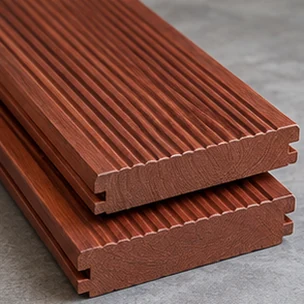
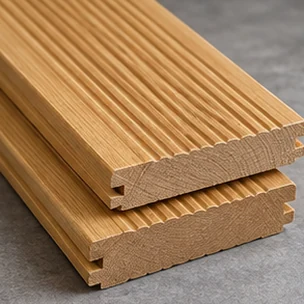
For dense hardwoods like Ipe, the single most common cause of installation problems is a mismatch between the decking's finished profile and the fastening hardware. Specify finished thickness, finished width, groove location (if any), and the exact hidden-clip or face-screw system you intend to use. Don’t leave compatibility to chance — the groove on a factory-profiled board can be millimetres different from a site-routed groove, and that difference will make clips loose, hard to install, or unusable.
This note walks through why those dimensions matter, how board thickness affects pilot holes and screw selection, the practical choices between face-screws and hidden systems, and the exact line items to include on your purchase order so the mill and the fastener supplier talk to the same drawing.
Buyers and specifiers frequently confuse nominal dimensions (what the product is called) and the finished, dressed profile that lands on the joists. Hidden-clip systems require predictable finished widths and an accurate groove depth and location so the clip engages the board and the joist correctly. Face-screw spacing and pilot-hole placement depend on finished thickness because the screw’s threaded portion must properly engage the joist without splitting the decking.
Finish machining changes both dimensions. A board sold as 1x6 Ipe can arrive as several different finished widths and thicknesses depending on edge treatment and surfacing. Insist on finished dimensions and tolerances in the contract, and if you plan to use a clip system, include groove location and tolerance as well.
Ipe is very dense; screws have to be selected and installed to avoid splitting and to ensure adequate withdrawal strength. The diameter of the pilot hole and whether you pilot at the face or the joist side depends on screw geometry and the hardwood’s density. For stainless fasteners intended for Ipe, many manufacturers publish pilot-hole recommendations specific to their screws — use those charts rather than guessing from softwood practice.
Screw length is set by the decking thickness plus the required embedment into the joist or sleeper. In specifications list a minimum threaded-portion embedment (not just the overall screw length) and require the fastener manufacturer to confirm compatibility with the chosen decking thickness. If you expect to countersink face screws, call out the head type, drive style (Torx or similar reduces cam-out), and whether washered or self-countersinking heads are required.
Face-screwing is the simplest approach: predictable hold, easy replacement of boards, and visual control. On Ipe, specify stainless fasteners made for hardwoods and plan for pilot holes at the deck board locations to avoid splitting. If using face screws in a premium application, call out head finish and color so the visual appearance matches the design intent.
Hidden systems produce a cleaner surface and often a more even board spacing, but they demand exact profiling. There are broadly two hidden approaches: clip-to-groove systems that screw through a clip into the joist, and spline/fastener systems that rely on matched grooves or tongues. Each clip profile expects a specific groove width, depth, and position relative to the board edge. If boards are factory-grooved, specify the clip model (or its exact groove dimensions) so the mill can machine to that dimension.
If you want factory grooving, include a drawing detail showing groove width, depth, distance from the board face, and whether the groove is on one or both edges. Add tolerance bands for groove dimensions so the mill knows how tight to hold tooling. If you prefer site grooving, state acceptable dimensional tolerances and who is responsible for test-fitting a clip sample before the full run.
Always pair a groove spec with the clip model or with the clip manufacturer’s suggested groove profile. If the clip system uses an offset to create a drainage gap, specify whether the finished face of the board is to be flush or relieved so the clip produces the intended gap. Also require that the supplier pretests a short run and returns sample boards with installed clips for sign-off when the job tolerances are tight.
Use a short, actionable checklist on the PO and contract. At minimum the order should say: finished thickness and tolerance, finished width and tolerance, whether boards are grooved (and groove details), board edge profile, whether ends are square or matched, requested surface finish (S4S, planed, etc.), moisture condition or drying target appropriate to the job site climate, and quantity in square footage or number of boards.
Add the fastening specification: face-screw type and head finish OR the exact hidden-clip system and clip model number; minimum required embedment of threaded portion into joist; pilot-hole responsibility (pre-drilled at factory or on-site) and pilot diameter callout to be matched to the chosen fastener, and a request for clip fit samples with the first shipment. Require the supplier to confirm that groove dimensions match the clip manufacturer’s recommendations or to provide a plan for re-profiling.
When the shipment arrives, verify finished thickness and width on a handful of boards across the bundle, confirm groove dimensions with a caliper if you’re using clips, and test-fit a clip and screw on-site before beginning the full installation. Check straightness and crown: hidden systems are sensitive to cupping and bow because tight profiles make boards hard to seat.
Finally, coordinate with the fastener supplier early. Share the finished-board samples and the joist material so they can confirm pilot-hole sizes, screw lengths, and corrosion resistance recommendations. Lock those details into the purchase order so the mill, the clip maker, and the installer are all working from the same specification.
Always specify finished dimensions and tolerances. Hidden fasteners and clip systems depend on the finished profile and groove geometry — nominal names don’t guarantee fit.
Not without checking. Ipe’s density changes pilot-hole sizing and screw performance. Use screws designed for dense hardwoods and follow the fastener maker’s pilot-hole and embedment recommendations.
Factory grooving is more consistent and reduces installation risk when using hidden systems. If you accept site routing, specify wider tolerances and test-fit clips before committing to the full installation.
Measure finished thickness/width and groove dimensions on representative boards, and test-fit your chosen clip or screw before starting installation.
Focused guides to the specification, application, and delivery questions behind this product.
Ipe is excellent for heavy outdoor furniture and exposed millwork if you design for its density and oiliness—use mechanical joinery, test adhesives on material from the same lot, pre-drill fasteners, and choose maintenance-friendly finishes.
Read this InsightUsing Ipe for exterior stairs and trim works well when you treat stair treads as a structural, safety‑critical element rather than simply reusing decking boards. Specify finished tread thickness and support, a safe nosing profile, a traction strategy that fits the design, joint details that allow movement, and corrosion‑resistant fasteners. Decide up front whether you will maintain the fresh Ipe color or allow it to silver, and require end‑grain sealing and a maintenance plan in the contract.
Read this InsightFor commercial boardwalks and other high‑traffic sites, specify Ipe with a heavier wear grade, purposeful surface profile for slip resistance, longer usable lengths to reduce joints, robust stainless or approved hidden fasteners with pilot‑hole protocols, and an explicit maintenance and spare‑parts plan. Tie procurement and staged deliveries to on‑site logistics and require mockups for wet performance.
Read this InsightA practical checklist for specifying Ipe on residential decks: confirm appearance and lot, choose board widths and layout, match fasteners and clips to dense hardwoods, decide whether to finish for brown or allow silvering, acclimate and test finishes on sample boards from the shipment.
Read this InsightPractical, shop-focused guidance to receive and store Ipe decking: prepare lifting and staging, inspect and document at delivery, stack flat with aligned stickers and breathable top cover, and stage boards for installation while monitoring moisture and mixing bundles for even appearance.
Read this InsightThis guide helps you decide when to specify Ipe for an exterior deck versus other hardwoods by comparing durability, appearance, tooling impacts, maintenance expectations, and key specification items to lock down at quote time.
Read this InsightSpecify board dimensions, edge profile and length mix before comparing decking quotes.
Read this InsightPractical guidance for selecting and working with Garapa decking: appearance, shop behavior, finish options, and what to confirm with suppliers before ordering.
Explore productMassaranduba decking is a very dense, tropical hardwood sold for exterior decking and heavy-use outdoor projects; confirm species, grade, and moisture with the supplier before specifying.
Explore product