Hardwood decking
Garapa Decking
Practical guidance for selecting and working with Garapa decking: appearance, shop behavior, finish options, and what to confirm with suppliers before ordering.
Explore productA practical checklist for specifying Ipe on residential decks: confirm appearance and lot, choose board widths and layout, match fasteners and clips to dense hardwoods, decide whether to finish for brown or allow silvering, acclimate and test finishes on sample boards from the shipment.
Ipe is a durable, dense tropical hardwood prized for long service life on decks — but that durability brings specific choices and tradeoffs. Before you order, decide whether your priority is maintaining the original brown color, minimizing visible fasteners, or simplifying long‑term maintenance. Each of those priorities affects board selection, fastener strategy and finish choices.
Treat specification as a system: the slab of decking, the framing and ventilation, the fastener type, and the finish must be compatible. A good outcome depends on picking the right appearance and lot, confirming fastener compatibility with the finished thickness you intend to install, and running finish tests on boards from the same production lot.
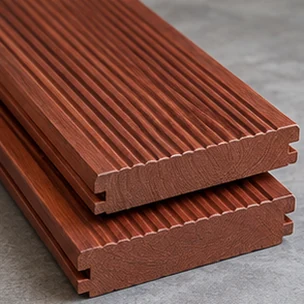
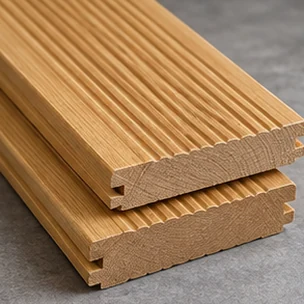
Ipe’s faces vary from tight, fine grain and even color to streaked or mineral‑streaked boards. Woodworkers and homeowners typically choose by how much natural character they want and how well it will pair with the house or landscape.
When you receive a quote or sample, request face photos or, better, a short bundle of sample boards from the same lot you’ll be buying. Confirm tonal range and grain character under outdoor light similar to the jobsite. If you need a consistent, uniform look, state that explicitly — ask the supplier to reserve boards from the same run rather than a mixed lot.
Board width changes how the deck reads and how quickly the surface will weather. Wider boards show more color variation and cupping potential; narrower boards give a tighter, more consistent pattern. Decide whether you want alternating widths, long continuous runs, or short butted boards — and specify lengths accordingly.
Plan the layout with drainage and ventilation in mind. Ipe performs best when the underside and joists are kept dry and ventilated. That affects joist spacing and the gap you specify between boards (wider gaps aid drainage and drying). Make these layout decisions before finalizing fastener type, because some clip systems require specific gaps for engagement.
Ipe’s density makes it unforgiving: a routing or fastening system that works for softwood will not behave the same here. Face‑screwing with quality stainless screws is the simplest, most serviceable approach when you want repairability and minimal special tooling. If you prefer a fastener‑free look, use a hidden clip system designed and rated for dense hardwoods and confirm it will work with the specific thickness you order.
Corrosion and staining are a practical risk. Avoid plain carbon steel or dissimilar metal contact with fasteners and framing; specify stainless fasteners and fastener hardware tested for use with tropical hardwoods. Also confirm pilot‑hole and countersink requirements: many installers pre‑drill or use self‑countersinking stainless screws to prevent splitting and to make fastening predictable in the shop and field.
Natural weathering turns Ipe to a stable silver‑grey over time. If your client prefers that weathered look, leave the boards unfinished and plan for occasional cleaning. If they want to preserve the original warm brown, plan on an initial sealer with UV inhibitors and a maintenance re‑application schedule.
Do not rely on a finish swatch from another lot. Always run finish tests on boards taken from the same shipment and install small, inconspicuous test panels in the same exposure as the deck. Test each finish using the exact installation method (screwed, clipped, end cuts and filled or not) and observe adhesion, darkening, and slip resistance after accelerated outdoor exposure. Use those tests to set a practical maintenance cadence you can specify to the homeowner.
Ipe can arrive drier or wetter than local conditions — avoid installing boards straight from shipping bundles without inspection. Stack and sticker bundles flat in a shaded, ventilated area and allow the boards to equalize with the site conditions for several days to a couple of weeks depending on weather and storage conditions. This reduces surprise movement once installed.
On arrival, inspect bundles for lot consistency, warp, and visible defects. Check that the supplier matched the quoted thickness and that any machining (grooves for hidden clips, micro‑ribbing) is as specified. Note and flag any boards you want held back for use as cut pieces or riser treads; think about where the most characterous boards will be placed on the deck so high‑visibility faces are used intentionally.
Machine and cut Ipe with sharp carbide tooling; the species is abrasively hard and dulls cutters quickly. When drilling or screwing near edges or ends, pre‑drill to prevent splitting and to keep screw heads seated cleanly. Countersink screw heads slightly for cleaner finishes when face‑screwing.
Seal exposed end grain on cut pieces before installation to slow localized moisture cycling and reduce checking. Keep compatible stainless or non‑reactive hardware on the job; avoid accidental contact with iron tools on fresh cuts or exposed fastener heads to reduce iron staining.
Write the decisions into the specification or contract: the agreed board width/length mix, fastener type and grade, finish brand and maintenance interval, accepted lot photos, and the acclimation protocol. That prevents ambiguity at install time and gives the homeowner a clear maintenance expectation.
For product details and to request samples from a supplier, see the Ipe Decking product page for the exact profiles and offerings you can specify on your next residential deck project.
No — untreated Ipe naturally weathers to a silver‑grey. If you want to preserve the brown, specify a UV‑blocking sealer and plan to reapply it periodically. Test the chosen product on sample boards from the same lot to confirm color retention and slip characteristics.
Yes, if you select a hidden fastener system rated for dense hardwoods and confirm compatibility with the decking thickness and groove profile. Hidden clips give a clean look but require the right clip material and engagement depth; otherwise face‑screws with stainless fasteners are a safer, more serviceable choice.
Use stainless fasteners and hardware specified for use with tropical hardwoods. Avoid plain carbon steel and dissimilar metals that can cause staining or corrosion. Confirm the fastener manufacturer’s recommendations for pilot holes and countersinking.
Allow boards to rest flat, stickered and ventilated at the jobsite until they have equilibrated with local conditions. Exact time depends on weather and storage conditions; inspect boards for cupping or twist before fastening and use the inspection to decide if more acclimation is needed.
Focused guides to the specification, application, and delivery questions behind this product.
Ipe is excellent for heavy outdoor furniture and exposed millwork if you design for its density and oiliness—use mechanical joinery, test adhesives on material from the same lot, pre-drill fasteners, and choose maintenance-friendly finishes.
Read this InsightUsing Ipe for exterior stairs and trim works well when you treat stair treads as a structural, safety‑critical element rather than simply reusing decking boards. Specify finished tread thickness and support, a safe nosing profile, a traction strategy that fits the design, joint details that allow movement, and corrosion‑resistant fasteners. Decide up front whether you will maintain the fresh Ipe color or allow it to silver, and require end‑grain sealing and a maintenance plan in the contract.
Read this InsightFor commercial boardwalks and other high‑traffic sites, specify Ipe with a heavier wear grade, purposeful surface profile for slip resistance, longer usable lengths to reduce joints, robust stainless or approved hidden fasteners with pilot‑hole protocols, and an explicit maintenance and spare‑parts plan. Tie procurement and staged deliveries to on‑site logistics and require mockups for wet performance.
Read this InsightPractical, shop-focused guidance to receive and store Ipe decking: prepare lifting and staging, inspect and document at delivery, stack flat with aligned stickers and breathable top cover, and stage boards for installation while monitoring moisture and mixing bundles for even appearance.
Read this InsightThis guide helps you decide when to specify Ipe for an exterior deck versus other hardwoods by comparing durability, appearance, tooling impacts, maintenance expectations, and key specification items to lock down at quote time.
Read this InsightSpecify finished thickness, finished width, groove geometry, and the exact fastener or clip model on the PO; require clip-fit samples and supplier confirmation of pilot-hole and embedment so Ipe’s density won’t surprise the field.
Read this InsightSpecify board dimensions, edge profile and length mix before comparing decking quotes.
Read this InsightPractical guidance for selecting and working with Garapa decking: appearance, shop behavior, finish options, and what to confirm with suppliers before ordering.
Explore productMassaranduba decking is a very dense, tropical hardwood sold for exterior decking and heavy-use outdoor projects; confirm species, grade, and moisture with the supplier before specifying.
Explore product