Thesis — why a tighter quote matters for face frames and trim
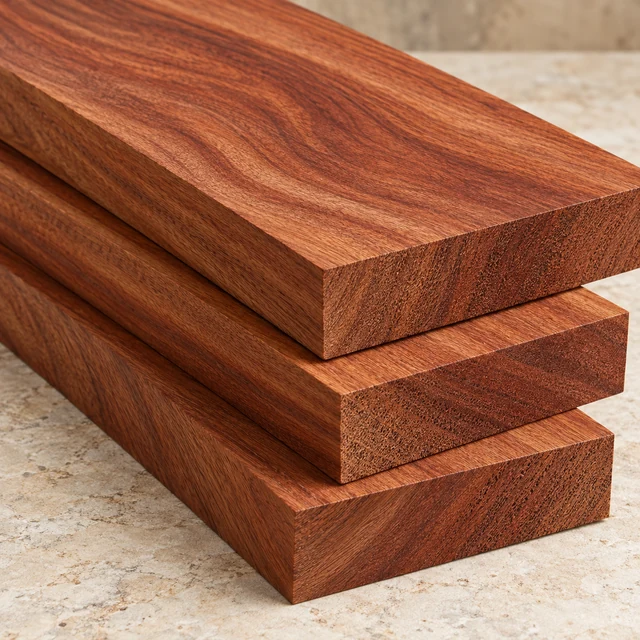
Utile is a good choice for visible casework where consistent color and edge appearance matter. For face frames, rails/stiles, and trim the mill’s preparation and the buyer’s acceptance criteria determine whether boards arrive shop‑ready or require extra work. When you write your quote, be explicit about surfacing, finished thickness, matching across runs, moisture condition, and length expectations — those five items control fit, grain match, and finish outcome.
Surfacing specification: what to request up front
Name the exact surface preparation you want on delivery. For face frames and trim most shops ask for boards surfaced both faces and at least one edge (S2S or S4S to the mill’s terminology), with the opposite edge left oversize if you plan to rip to width in the shop. If you need final-caliber surfaces for finishing, specify “surfaced to final thickness and ready to paint/stain” so the mill knows to leave no heavy planning allowance.
If you prefer to do final thicknessing after delivery (for example to joint ends for perfect glue joints), say so and indicate how much extra thickness you want left for the shop to remove. Also specify whether you want jointed/planed edges for glue-up or straight-line ripped edges for moulding profiles — that changes how the mill sequences boards and can affect longboard yields.
Thickness and tolerance: be explicit, not vague
Don’t accept “nominal” thickness alone. Specify the finished thickness you expect and require the supplier to hold a tolerance that matches your shop workflow. State whether thickness is a post‑surfacing target or a nominal size that will be surfaced again in your shop. This avoids receiving boards that are over‑ or under‑thick and reduces machine time.
Include an acceptance method in the spec: for example, that thickness is measured at mid‑span on each board and that any board outside tolerance is subject to rejection or discount. If your project involves face frames alternating between narrow stiles and wide rails, note which pieces must be milled to exact thickness vs. which can be trimmed in the shop.
Matching rules for visible runs: how to get consistent grain and color
For face work, matching is as important as thickness. Tell the supplier how you will accept boards visually: require sequential run matching (boards pulled from the same flitches or numbered sequentially), color-sort to match a provided sample, or bookmatch for panel faces. If you need matched rails and stiles within a single face frame, say that explicitly.
When ordering long runs of trim, require run‑matching across the full length rather than a random assortment. If you want consistent sapwood/heartwood proportions or to avoid highly figured boards in key visible locations, include that too. Ask the mill to provide a small sample bundle or approved production board before final shipment whenever color and figure control are critical.
Moisture condition and conditioning: specify the target
Moisture is the single most common cause of bowing, checking, and finish problems. Specify the expected condition for delivery: either that lumber be kiln‑dried and held to a stated moisture condition appropriate for the installation environment, or that it arrive stickered and dry but marked for acclimation. Rather than leaving it vague, request the supplier include the measured moisture content at delivery or the lot’s target equilibrium moisture.
If your jobsite has atypical humidity (coastal, unheated, or newly enclosed construction), tell the seller so they can aim for the appropriate equilibrium target. Also include instructions for acclimation on receipt — for visible face frames and trim you may require the boards to be acclimated in your shop for a specified period before machining and glue‑up.
Delivery length expectations and handling instructions
State whether you want full‑length boards, random lengths, or cut‑to‑length packs. Face frames often benefit from long, continuous lengths so you can resaw rails and stiles from the same board; if that’s your preference, require long lengths and note the minimum acceptable length. If your shop prefers pre‑cut lengths for production efficiency, provide an accurate cut list.
Also include handling and packing instructions: request stickered bundles, end‑protected packaging, and clear labeling by grade/lot and intended use. Ask the mill to flag any boards with significant defects, and request a sample board or photo of the lot for approval when matching is important.
Receiving checklist and acceptance procedure
On delivery check four things before signing off: that the surfacing matches what you ordered, thickness across sample boards is within tolerance, the lot visually matches approved samples or runs, and that moisture content is documented or measured. If any item fails, follow the acceptance procedure you included in the quote — reject, request replacement, or accept at agreed discount.
Record measurements and photos on arrival and communicate quickly with the supplier if anything is off. For projects with tight color or grain matching, plan to hold the lot in a controlled shop environment until acclimated and approve a final pull list before machining.
BEFORE YOU REQUESTYour sourcing checklist.
- Surfacing requested (e.g., surfaced both faces and one edge; specify whether final thickness is required)
- Finished thickness and explicit tolerance to be held at the mill
- Matching rules: sequential run, color sample approval, or bookmatched panels
- Moisture condition at delivery and acclimation instructions (request measured MC or target EMC)
- Length expectation: full‑length, random, or cut‑to‑length list
- Packing and labeling: stickered bundles, end protection, labeled lots
- Sample board or photo approval option for critical visible runs
- Acceptance method and remedy for out‑of‑tolerance boards
Common questions.
Should I order Utile surfaced to final thickness or leave extra for the shop?+
That depends on your workflow. If you want shop‑ready parts and minimal machine time, specify surfacing to final thickness and a tight tolerance. If you prefer to joint and final‑thickness parts after acclimation, ask the mill to leave a machining allowance and state how much you will remove in the shop.
How do I ensure match across an entire run of trim?+
Require run‑matching in the quote and either request sequential boards from the same flitch or ask for a pre‑shipment sample bundle for approval. Make your visual acceptance rules explicit so the mill can sort and stage boards appropriately.
What moisture content should I specify for interior cabinet face frames?+
Specify a moisture condition appropriate to the installation environment and request the lot’s measured moisture content at delivery. If the project is in an unusual climate or the building isn’t climate‑controlled yet, tell the supplier so they can aim for the correct equilibrium target.
Is it reasonable to ask for long boards for face frames?+
Yes. If you need continuous grain for rails and stiles, request longer lengths and state the minimum acceptable board length or ask for full‑length boards. Conversely, provide a cut‑to‑length list if you want pre‑cut material.