Thesis — pick ipe when longevity and abrasion resistance matter more than upfront cost
Ipe (marketed as ipe or Brazilian walnut) is a specialty exterior hardwood chosen for extreme wear, extended life without replacement, and resistance to rot and decay. Use ipe when you expect heavy use, limited maintenance intervals, or when a long service life will justify a higher initial material and installation cost.
If your decision hinges on appearance alone, or you need easy machining and fastening for fine interior millwork, ipe may not be the most practical choice. The rest of this guide breaks down the key tradeoffs—durability and wear, appearance matching, tooling and fasteners, and lifecycle cost—so you can match the wood to the job.
Durability and wear considerations — where ipe excels
Ipe’s primary commercial advantage is long-term performance in exterior conditions. It resists decay, insect attack, and abrasion better than most domestic hardwoods and many softwoods. That makes it a strong candidate for decks, stairs, boardwalks, heavy-use outdoor seating, and commercial exterior flooring where replacement is difficult or costly.
For interior applications that see heavy traffic—commercial stair treads, bar tops, or heavy-duty flooring—ipe can be an excellent choice if you want a long-lived, dense surface. Expect a lengthy service life with appropriate substructure, acclimation, and finishing. Balance that against the extra work required in fabrication and fastening described below.
Appearance and matching — design choices and limits
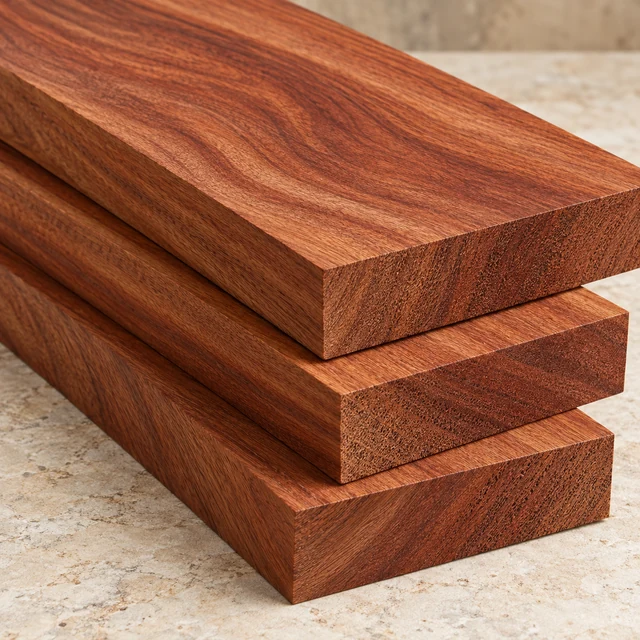
Ipe’s natural color range runs from olive-brown to deep chocolate with occasional dark streaks. It patinas to a silver-gray outdoors if left unfinished. If a consistent, pale, or light grain is central to the design, choose a different species or be prepared to finish and maintain color with regular oiling or UV-stable coatings.
When appearance matching across interior and exterior elements is required, plan upfront: decide whether the exterior assemblies will be oiled or allowed to silver. Match interior selections to the final expected exterior tone rather than the freshly sawn color. Ask your Ipe Lumber product page or supplier for photos of the specific lot when color consistency is critical.
Tooling, machining, fastening — plan for toughness
Ipe is very hard and dense compared with typical domestic species. That affects every stage in the shop. Use carbide-tipped cutters, reduced feed rates, and sharp tooling designed for dense exotics; expect more frequent cutter changes and slower production rates on large runs.
Fastening requires attention. Ipe can split if fasteners are driven without pre-drilling; self-tapping deck screws and stainless fasteners are common, but always follow the fastener manufacturer’s guidance for dense hardwoods. Through-bolting or stainless concealed fasteners reduce the risk of splitting and make future adjustments easier. If you rely on glue joints, confirm adhesive compatibility and clamping pressure, and test bond strength for your chosen glue and substate.
Cost-to-life-cycle reasoning — the numbers that matter (not the numbers themselves)
Ipe’s sticker price and installation cost are higher than many other hardwoods or pressure-treated decking. The economic argument for ipe is not upfront cost alone but lifecycle costs: lower replacement frequency, reduced rot remediation, and a high threshold for wear that reduces ongoing repair and replacement labor.
When assessing a project quote, build a simple comparison: expected service life under local conditions, likely maintenance schedule, and replacement costs over the life of the project. For public or commercial projects where replacing materials is disruptive or expensive, ipe’s longer service life often tips the balance in its favor.
Practical recommendations and specifying tips
For decks and exterior walking surfaces: specify ipe where heavy foot traffic, limited maintenance budgets, or a long service life are priorities. Provide fastening details in your spec (pre-drill where required, use stainless or through-bolts for critical joints) and decide early whether you want the natural silver patina or a maintained oiled finish.
For interior heavy-use areas: use ipe when you want a durable, wear-resistant surface and you’re prepared for more difficult machining. Consider engineered assemblies or veneers for large interior surface areas when end-grain movement or weight are concerns.
Before you order, tie your spec to the Ipe Lumber product page: verify available dimensions, grades, and the supplier’s guidance on recommended fasteners and pre-sealing. Ask for pictures of the lot, a description of finish and straightness tolerances, and a delivered quote that includes lead time and freight details.
BEFORE YOU REQUESTYour sourcing checklist.
- Confirm the product form and grade on the Ipe Lumber product page (decking, dimensional lumber, or slabs).
- Request photos of the specific lot and confirm color and grain range for appearance matching.
- Ask for the supplier’s stated moisture condition and acclimation instructions for interior applications.
- Specify fastening strategy in the contract (pre-drilling, stainless screws, through-bolts, concealed fasteners).
- Discuss recommended tooling and cutter specifications with your shop before the first run.
- Decide and document whether exterior surfaces will be left to silver or maintained with oil/coating.
- Confirm lead time, delivered quote, freight handling, and on-site receiving requirements.
- Ask about legal sourcing documentation or required paperwork for your jurisdiction and project.
Common questions.
Is ipe worth the extra cost for a residential deck?+
It depends on your priorities. If you value minimal replacement and a very long-lived surface—especially in a high-use or hard-to-access location—ipe often justifies the higher upfront cost. If consistent light color, easy cutting, or lower initial installation cost are more important, consider alternative species.
Will ipe split when I drive screws or nails?+
Ipe can split if fasteners are driven without pre-drilling or if fasteners are underspecified. Pre-drilling, using the right stainless or coated fasteners, and following manufacturer recommendations for dense hardwoods prevents splitting. For critical joints consider through-bolts or concealed fastening systems.
Does ipe need oiling or special maintenance?+
Ipe does not require oiling to resist rot—its natural durability provides long outdoor life. Oiling or finishing is a maintenance choice to retain the original brown color and slow UV graying. If you want a consistent color over time, factor scheduled maintenance into your lifecycle costs.
Can I use standard shop tooling for ipe?+
Standard tools will cut ipe, but expect rapid dulling. Use carbide tooling, reduce feed rates, and plan for more frequent sharpening or replacement. Test cuts and adjust machine settings before beginning production runs.