Thesis — why ipe needs careful detailing
Ipe is an extremely dense, tannin-rich hardwood that performs exceptionally outdoors, but those same tannins and the timber’s density create predictable detailing risks: tannin bleed that stains adjacent light-coloured materials, trapped moisture where boards cantilever or meet dissimilar materials, and accelerated corrosion of incompatible fasteners or metal trims. Successful ipe siding is less about exotic finishes and more about simple, consistent water control, material separation, and a tested mockup of the actual lot you’ll install.
Flashing and water-control basics
Treat ipe cladding like any rainscreen cladding: control bulk water at the penetrations and transitions before you think about the face material. Provide continuous through-wall flashing at the base of the wall and at every horizontal interruption (window heads and sills, shelf returns, deck-to-wall junctions). Where the cladding butts to foundations or low windows, run a visible flashing return that directs water to the exterior and prevents capillary draw into backing materials.
Make flashing laps accessible for inspection and fasten flashings to durable substrates. Laps and terminations are the places tannin-stained runoff will concentrate, so choose flashings and sealants that are compatible with ipe’s tannins and that won’t trap moisture against the wood. Where you plan to use metal trim, isolate it from the wood with an appropriate non-absorbing material to prevent staining and galvanic corrosion.
Fasteners and connections — avoid surprises
Because ipe’s surface hardness will split many woods, and because tannins accelerate corrosion, select fasteners and connectors that won’t rust or react. Use stainless steel fasteners for through-fastening and look for compatible stainless clips for hidden attachment systems. In marine or coastal exposure, specify higher-corrosion-resistance stainless or bronze if local practice calls for it.
Pre-drill pilot holes and countersink for face-fastening; density makes driving direct without pilot holes invite splitting or mushroomed heads. For concealed systems, confirm clip compatibility with the board thickness and check that clips permit vertical movement of the boards for seasonal shrinkage and swelling. Use sealant or isolation washers where a fastener passes through a flashing or metal trim to keep tannin-rich runoff from pooling at the metal/wood interface.
Joints, reveals and drainage gaps
Ipe will move with changes in moisture and temperature. Lay out joints and reveals to maintain even, consistent gaps across the elevation and to allow water to escape and air to circulate behind the cladding. A qualified rainscreen gap behind the siding prevents trapped moisture; continuous vertical drainage behind the lowest course is essential.
When designing horizontal runs or course-to-course details, avoid tight butt joints that mate two end grains directly against each other without a way to dry. Where boards butt, provide a small drainage gap and arrange the profile so any runoff follows the face and exits the assembly rather than pooling. If the design calls for mitered or abutting corners, consider an interstitial vertical flashing or a drip to avoid moisture retention at the joint.
Surface finishing, end-grain treatment, and appearance control
Ipe weathers naturally to a silver-grey if left unfinished; many projects accept that patina and avoid coatings. If you plan to retain the fresh colour, use a penetrating UV inhibiting oil finish and plan on periodic maintenance. Avoid thick film, non-breathable coatings on exterior vertical cladding that can trap moisture under boards or hide early failure at seams.
Pay attention to end grain: it soaks and releases moisture faster than face grain and will darken and bleed more aggressively. Seal end grain on exposed edges and cut ends with several coats of a compatible end-grain sealer or a penetrating finish before installation. That reduces early tannin runoff and gives a more predictable appearance as the cladding weathers.
Mockups and sample checks before you commit
Always create a mockup with boards from the actual lot you will install. Test your full detailing stack — flashing, fasteners, sealants, trim materials, and finish — on a vertical test panel sized to expose the real transitions and terminations. Wet the mockup repeatedly to accelerate tannin migration and observe staining on adjacent materials, flashings, and the cladding itself.
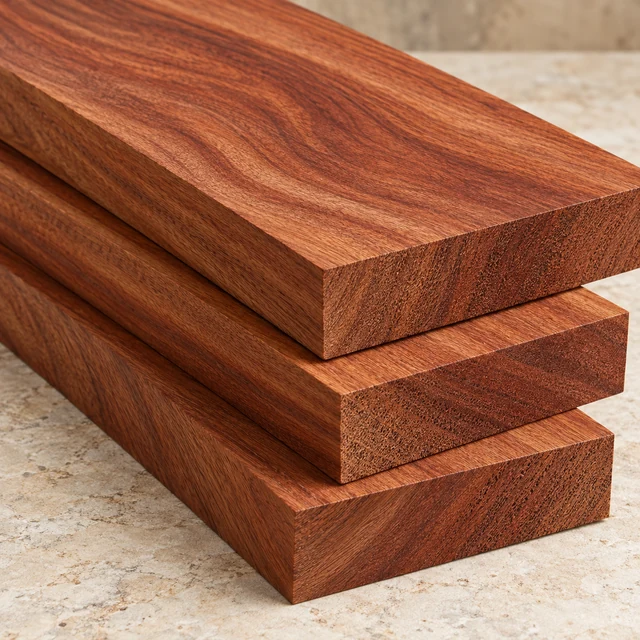
Confirm colour and grain selection on the lot: ipe from different shipments varies in tone and figure. Ask your supplier to set aside the boards used for the mockup or flag the lot and confirm the lot on the Ipe Lumber product page so the accepted appearance is the one that ships. Treat mockup approval as part of the contracted scope — it’s the most effective way to avoid costly surprises on site.
BEFORE YOU REQUESTYour sourcing checklist.
- Confirm the exact lot and appearance on the Ipe Lumber product page and arrange a mockup from that lot.
- Specify corrosion-resistant fasteners and hidden clips compatible with dense hardwood (confirm type for coastal vs inland exposure).
- Include through-wall flashing details at bases, interruptions, and terminations in the contract drawings.
- Require a continuous drainage gap behind cladding (rainscreen) and clear guidance for course-to-course reveals.
- Document end-grain sealing and finish system, and require on-site sample verification of finish acceptance.
- Allow time and space for acclimation and moisture-content checks on arrival; plan storage so boards remain dry and ventilated until installation.
Common questions.
Will ipe stain light-coloured adjacent materials?+
Yes. Tannins in ipe will leach and can stain light-coloured cladding, trim, masonry, and sealants after rain events. Prevent staining by using continuous flashing at transitions, isolation materials between wood and light-coloured surfaces, tested sealants and by accepting a mockup as part of final approval.
What fasteners should I use for ipe siding?+
Use stainless fasteners for exposed fastening and compatible stainless or bronze clips for hidden systems. Pre-drill pilot holes to avoid splitting. In high-salt environments choose a higher-corrosion-resistance alloy per project best practice and supplier recommendations.
Should ipe siding be finished or left to weather?+
Both approaches are valid. Left unfinished, ipe will weather to a silver patina and requires little maintenance. If you need to retain initial colour, apply a penetrating UV-blocking oil finish and expect periodic reapplication. Avoid impermeable film finishes that can hide problems at joints.
How do I check that the lot I’m buying will match the mockup?+
Request that the exact lot used for the approved mockup be identified on the supplier’s product page or order paperwork, and ask the supplier to segregate or flag that lot. Inspect boards on delivery against the mockup and require acceptance before installation continues.
How do I prevent moisture traps at horizontal joints?+
Provide a drainage path and a small, consistent reveal at horizontal joints so water can escape and air can circulate. Use flashing at horizontal interruptions and avoid details that place two end grains in direct contact without a drying channel.